One company goal. Everyone’s next step.
OrgRelay connects the work between a company goal and the people who deliver it. Give employees and Agents clear tasks, follow progress in one view and bring important choices to your managers and owners.
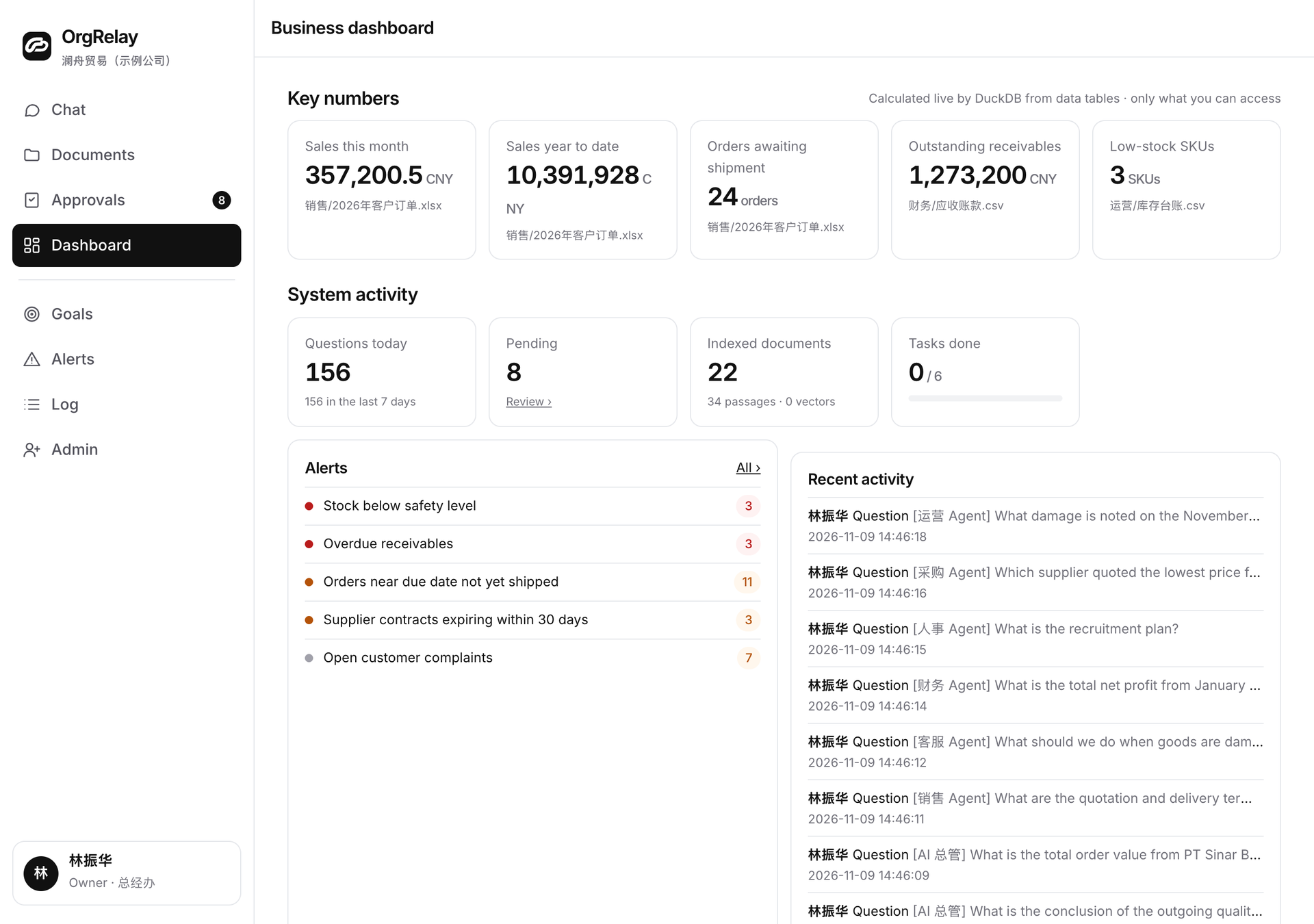
Organize work
See the company
Stay in control
Give managers the action, sources and business effect they need to approve a customer promise, purchase or change of scope.
↗Company knowledgeConnect a team’s questions to current instructions, document owners and the sources behind a useful answer.
↗IntegrationsDefine the records, fields, access and review a workflow needs, then use a connection brief to keep its business purpose clear.
↗Make the goal useful to the person doing the work.
A services manager wants Friday’s client handoff ready for review. Goals and tasks turn that request into the scope, deliverables and owners the team needs. The AI Chief assigns the drafting, checking and handoff work.
The dashboard brings completed work and waiting decisions together. A manager can open the task behind a status and ask the right colleague a specific question. The security page explains how information is handled on this website.
Keep the whole working loop connected.
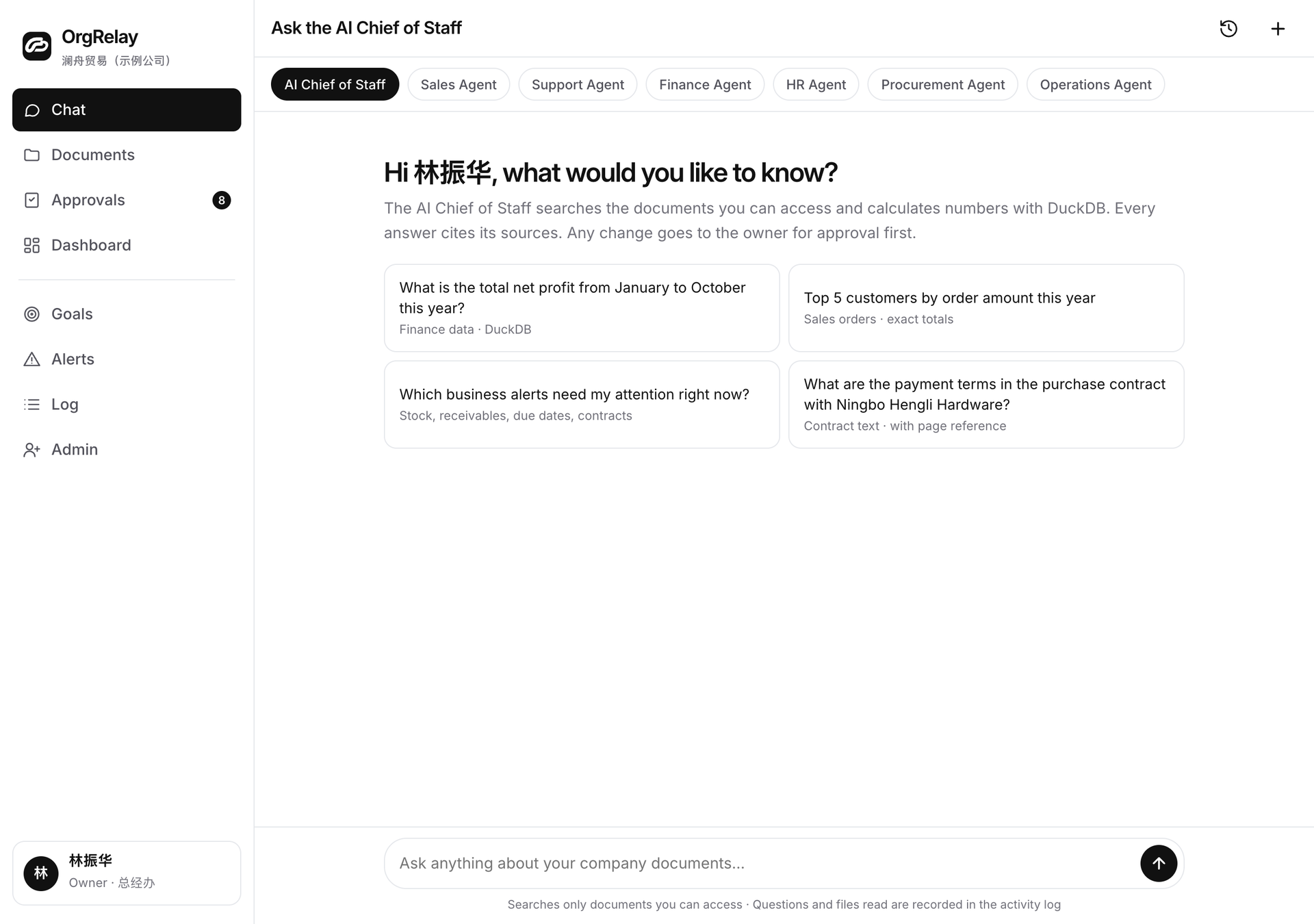
Use company knowledge to bring the relevant instructions into a task. Send a proposed commitment through approvals, and use alerts to bring a waiting answer to its owner.
A Sales Agent drafts the next customer reply. Customer service matches a question to the right guidance. Procurement compares supplier terms, finance highlights record differences, HR assembles role-specific checklists and operations follows team handoffs.
- 01
Define the result
Name what the recipient needs, the date and the person who reviews it. Use a concrete outcome such as a client handoff with scope, open questions and the next contact.
- 02
Share the work
Check the proposed tasks with the manager. Give employees and Agents jobs that fit their sources, responsibilities and place in the handoff.
- 03
Work with the right context
Attach the relevant request, document or policy. A colleague should be able to trace a date or condition in the draft to the source that supports it.
- 04
Make the next decision
Bring the proposed action and its effect to the responsible manager or owner. Record the agreed next step with the task.
The company operating loop
Follow a client handoff through the week.
A 40-person services team uses one goal to bring a client brief, delivery tasks and a manager’s review together.
- 01
Monday · Agree the handoff
The owner names the client outcome. The manager confirms the scope and chooses the colleague who receives the completed handoff.
- 02
Tuesday · Draft and check in parallel
An employee writes the delivery summary while an Agent lists the client’s questions. Each task points to the same scope document.
- 03
Wednesday · Settle a changed request
The client asks for an extra deliverable. The manager receives the request beside its effect on the current handoff and delivery date.
- 04
Thursday · Review the handoff
The manager reads the updated summary and confirms the version the client team will receive. The owner decides a change reserved to their role.
- 05
Friday · Close with the next action
The team reviews the delivered work, open client questions and the person responsible for each follow-up.
Place authority beside the action.
The people-in-control guide helps your company name who drafts, who reviews and who approves each business commitment.
| Responsibility | AI contribution | Manager judgment | Owner judgment |
|---|---|---|---|
| Goal and priorities | Break the outcome into tasks and suggested owners | Confirm delivery responsibilities | Set company direction and trade-offs |
| Customer communication | Draft the response from the agreed sources | Approve wording and terms within mandate | Approve reserved customer commitments |
| Purchasing | Compare the requested item and supplier terms | Review the recommendation | Authorize spending above delegated limits |
| Progress review | Summarize task results and waiting questions | Confirm the team’s next actions | Choose important changes to scope or priorities |
Carry the source through the handoff.
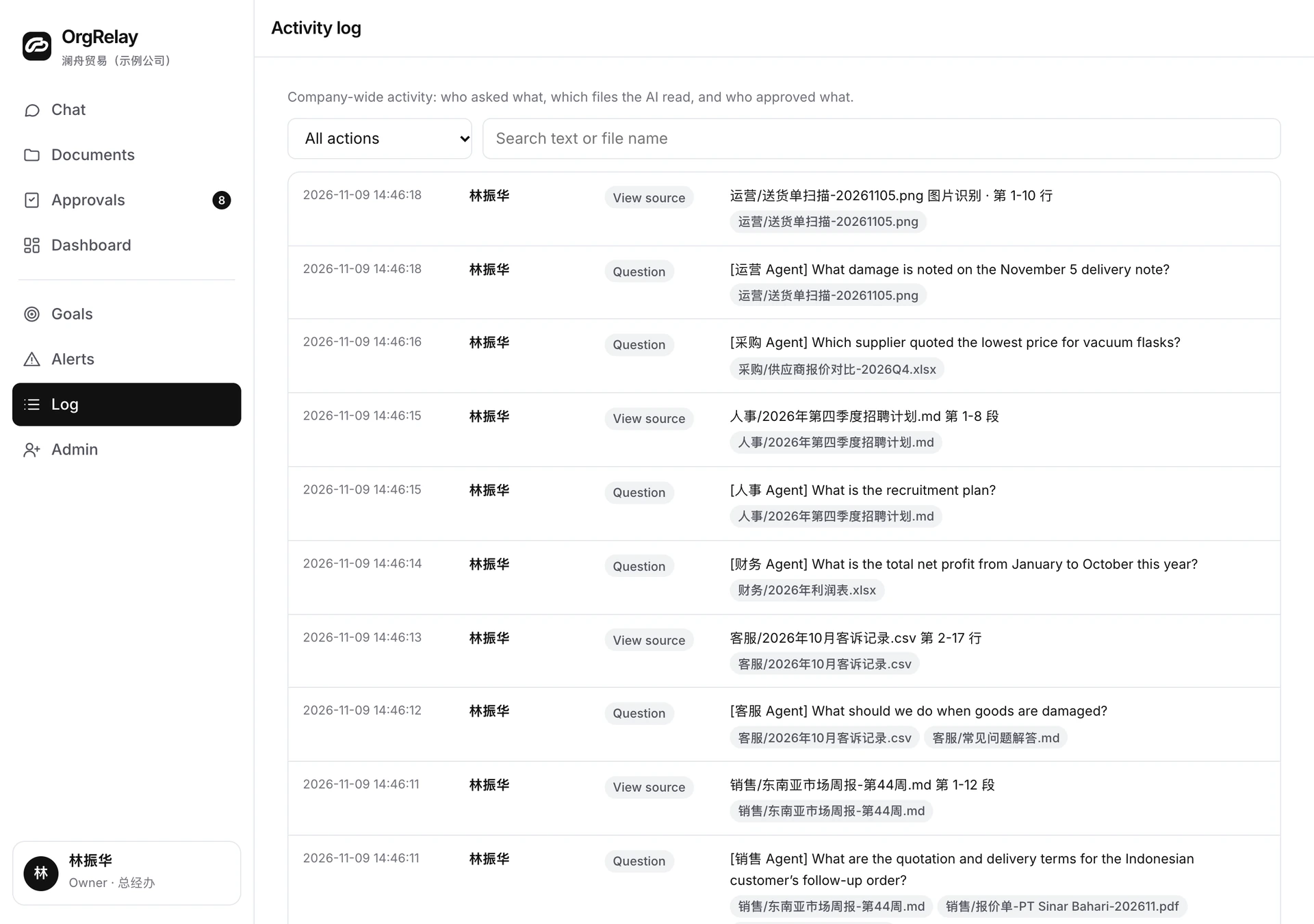
A useful task contains the request, the source material, the responsible colleague and the result the next person needs. Integrations help define how a workflow connects to those sources.
The result might be a customer draft, a supplier comparison or a daily team summary. Each includes the next action and its owner. Read about OrgRelay for the company model behind that connected way of working.
Choose your first company workflow.
Explore solutions around the people and process involved. A small business can start with a weekly sales review; a growing company can connect the next team in a recurring handoff.
Use the guides and templates to describe the job, compare plan scopes and review company details in the company-context form. Bring one goal, one reviewer and a source your team understands.
Questions, answered.
What connects the product’s different capabilities?
The company goal: it gives each task, Agent assignment, progress update and approval a shared reason and a named next action.
What should our first goal look like?
Choose a recurring outcome with a clear recipient, such as a weekly enquiry review or a client handoff. Name its sources and reviewer.
How do specialist Agents fit into the plan?
Each receives a focused job, such as drafting a reply, comparing terms or assembling an onboarding checklist. The Chief connects those jobs to the team’s tasks.
Where do managers make decisions?
Approval requests bring the proposed action, its sources and its business effect to the manager or owner responsible for that decision.