Keep cross-team work connected as responsibilities spread.
Give each unit a clear contribution and a reliable way to hand it to the next team. OrgRelay connects shared goals with local responsibilities, helping companies of 50–500 people surface the decisions that need a wider view.
Make the interfaces between teams explicit.
The goal brief links each contribution to the company result. The AI Chief coordinates dependencies, while the management dashboard design shows the receiving role and question at each boundary. Local teams can retain their operating context while making consequential dependencies visible.
Monday: agree the contributions to a shared delivery review.
A 180-person business is reviewing a customer commitment that draws on several units. The Sales Agent assembles the requirement, the Procurement Agent gathers supplier context, and the Operations Agent connects open dependencies. The owners’ scenario and managers’ scenario distinguish company choices from everyday coordination.
Agree what the receiving team needs before work changes hands.
The company knowledge design retains reference definitions and versions. The approval design states the consequence being reviewed. The employee workflow gives colleagues a way to raise source, timing or responsibility questions before accepting their part of the work.
A cross-team dependency has two sides
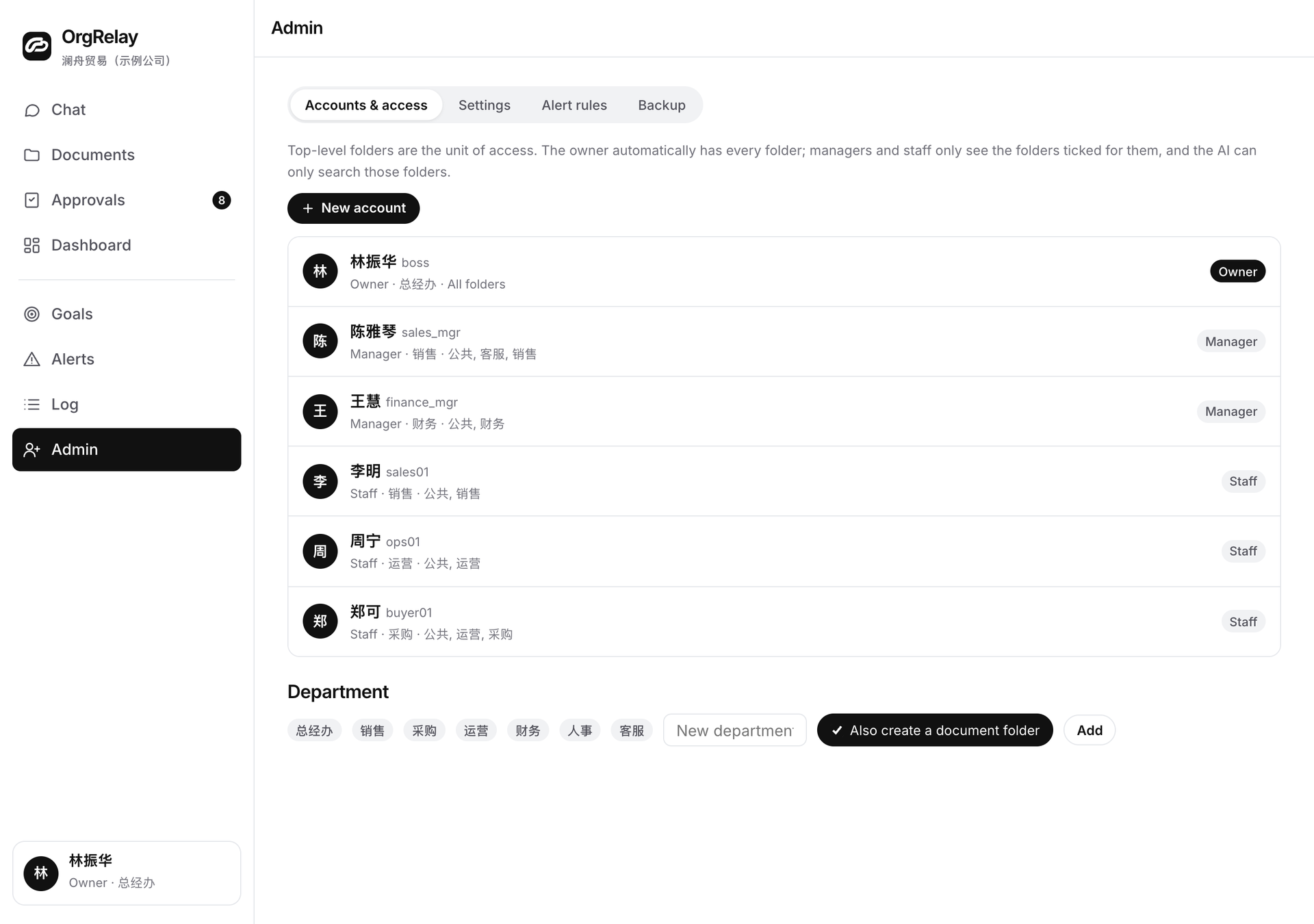
Give each shared source an identifiable owner.
The Finance Agent needs relevant records; the HR Agent needs information appropriate to the people-related task. Use the security page to discuss audiences and the integration support to describe source and action requirements. A summary for another unit should retain the context needed to interpret it.
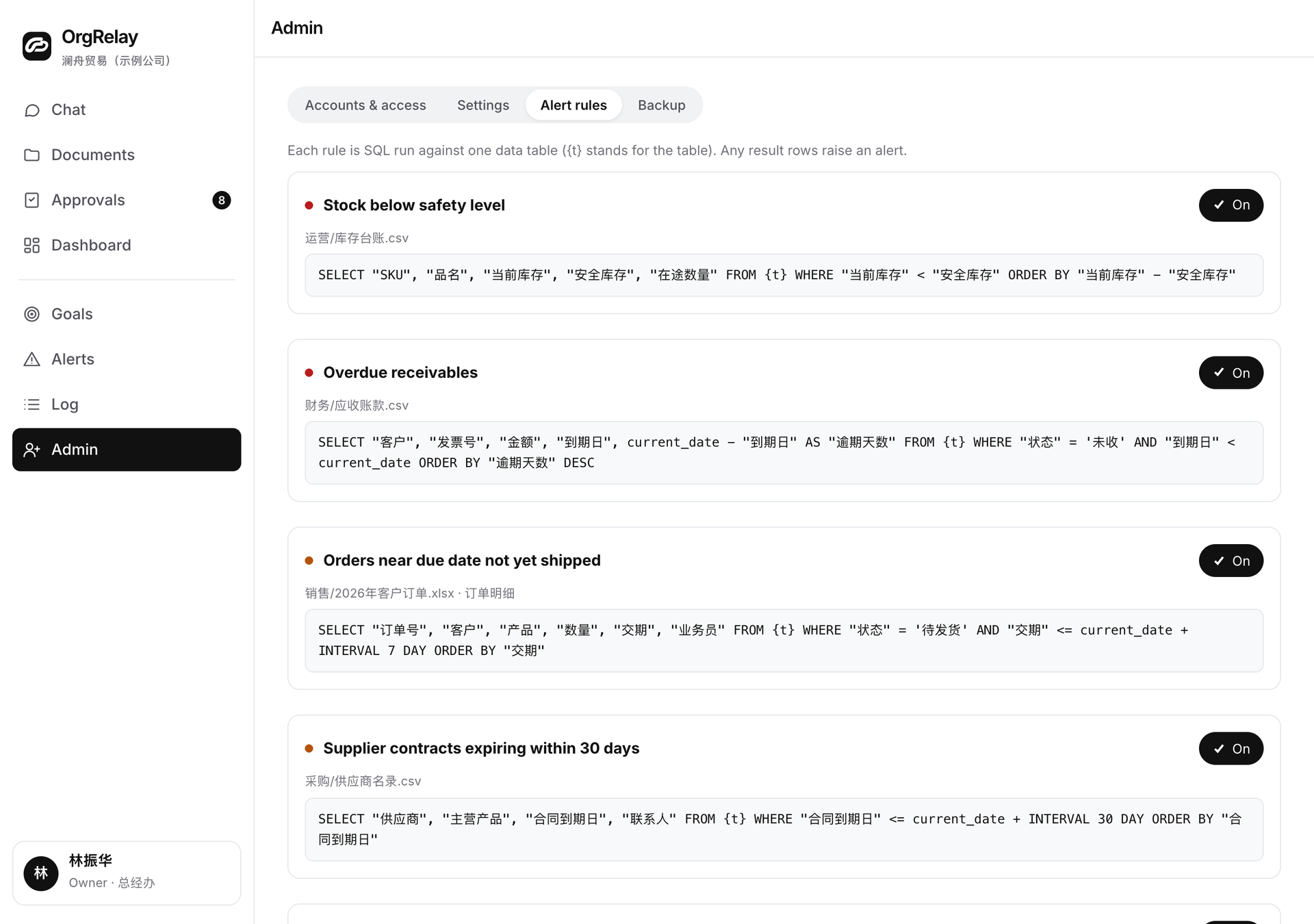
Wednesday: one unit’s change affects another unit’s plan.
The exception workflow identifies the revised condition and both affected outputs. Managers assess local adjustments; the trust model directs choices with wider consequences to the appropriate decision-maker. The proposal includes the views of the teams whose work would change.
Keep specialist judgment and shared coordination close to their owners.
The product overview connects the work. A Support Agent contributes customer-case context; manufacturing involves distinct planning and specialist responsibilities. Assign review according to the consequence being considered.
| Review purpose | Human responsibility | Decision owner |
|---|---|---|
| Arrange a unit’s work | Unit manager confirms resources | Local authority governs the arrangement |
| Change a shared dependency | Affected teams explain the impact | Designated cross-team role decides |
| Accept a company commitment | Responsible roles supply the basis | Authorized company decision-maker accepts |
Make an interrupted source update a clear receiving question.
State which work is affected, who checks the original and what will establish that the source is current. The resource guides help record the handoff. The receiving unit confirms the version it can use before continuing the dependent work.
Friday: improve the boundary creating repeated questions.
Identify whether the cause concerns definitions, source ownership or delegation, and assign the corresponding change. The small-business scenario can inform a short loop within a unit; add explicit receiving conditions when the result crosses into another team.
Start with a shared workflow both sides can inspect.
Choose a familiar process in trading, ecommerce or professional-services. Compare plan scope around the actual receiving roles. Use the company-interest preview or demo to describe the shared outcome, relevant source owners and a change that needs a wider decision.
Questions, answered.
How can units retain local flexibility?
Agree common conditions and reserved decisions, then let unit managers arrange work within their actual mandate.
What should be aligned before reports are combined?
The source, period, field meaning and receiving conditions of the contributing records.
Who handles a cross-team dependency?
Source owners clarify the facts, affected managers assess the impact and the designated role decides the wider consequence.
What is a useful first cross-unit test?
One handoff with a clear sender and recipient, plus a revised source or a change of reviewer.