Give the team its next step.
The AI Chief turns your company goal into work people can pick up. It assigns tasks to colleagues and Agents, follows the handoffs and brings decisions to the person who can move the work forward.

Connect the owner’s direction to the team’s day.
“Follow up this week’s enquiries” becomes useful when the team knows which customers, which questions and what Friday’s result should contain. Put those details in goals and tasks, then follow the work on the dashboard.
The Chief gives a Sales Agent the enquiry summary and reply draft, and an Operations Agent the delivery handoff. It routes commercial commitments through approvals so the manager receives a specific proposal to decide.
A trading company’s week, from goal to customer follow-up.
In a 30-person trading company, the owner wants Friday’s enquiry review to show a next action for every selected buyer. The sales manager chooses the enquiry set and asks purchasing and operations to join the work.
- 01
Monday · Set the outcome
The owner names Friday’s result. The Chief lists six jobs: gather enquiries, identify buyer questions, compare supplier terms, confirm delivery details, draft replies and summarize follow-ups. The manager assigns the people and Agents.
- 02
Tuesday · Work in parallel
A salesperson explains the buyer’s specification. The Sales Agent drafts the follow-up. Purchasing checks the quoted terms, and an operations colleague confirms the delivery information.
- 03
Wednesday · Resolve a changed date
A supplier revises its dispatch date. The Chief connects that change to the affected customer draft and asks the manager to choose the wording and next action.
- 04
Thursday · Review the proposed reply
The manager reads the buyer’s question, confirmed delivery information and draft together. The owner receives a separate decision when the proposed commitment exceeds the manager’s mandate.
- 05
Friday · Start the next week with clear owners
The team reviews completed replies and the questions still awaiting a customer or supplier. Each remaining task names the colleague responsible and the next check date.
Build a plan the team can act on.
Give the Chief the goal, the expected result, a deadline and the colleagues involved. Add the relevant instructions from company knowledge and define the source scope for any integration.
A manager checks responsibilities and decision points. Each employee then receives a task with the material and recipient they need. Alerts bring a blocked handoff back into the team’s view.
- 01
1 · Describe the result
Write what the recipient should receive and when. For a buyer follow-up, include the selected enquiry set, the required reply contents and the sales manager who reviews it.
- 02
2 · Assign the work
Read the proposed tasks as a group. Match each to a colleague or Agent, and connect tasks that depend on the same supplier answer or delivery check.
- 03
3 · Name the decision points
Specify who reviews routine customer wording and who approves changes to significant commitments. Put the relevant conditions beside the task.
- 04
4 · Follow the handoff
When a source changes, review the tasks that use it. Close each item with the result, its recipient and the next action agreed by the team.
Customer follow-up: a proposed weekly plan
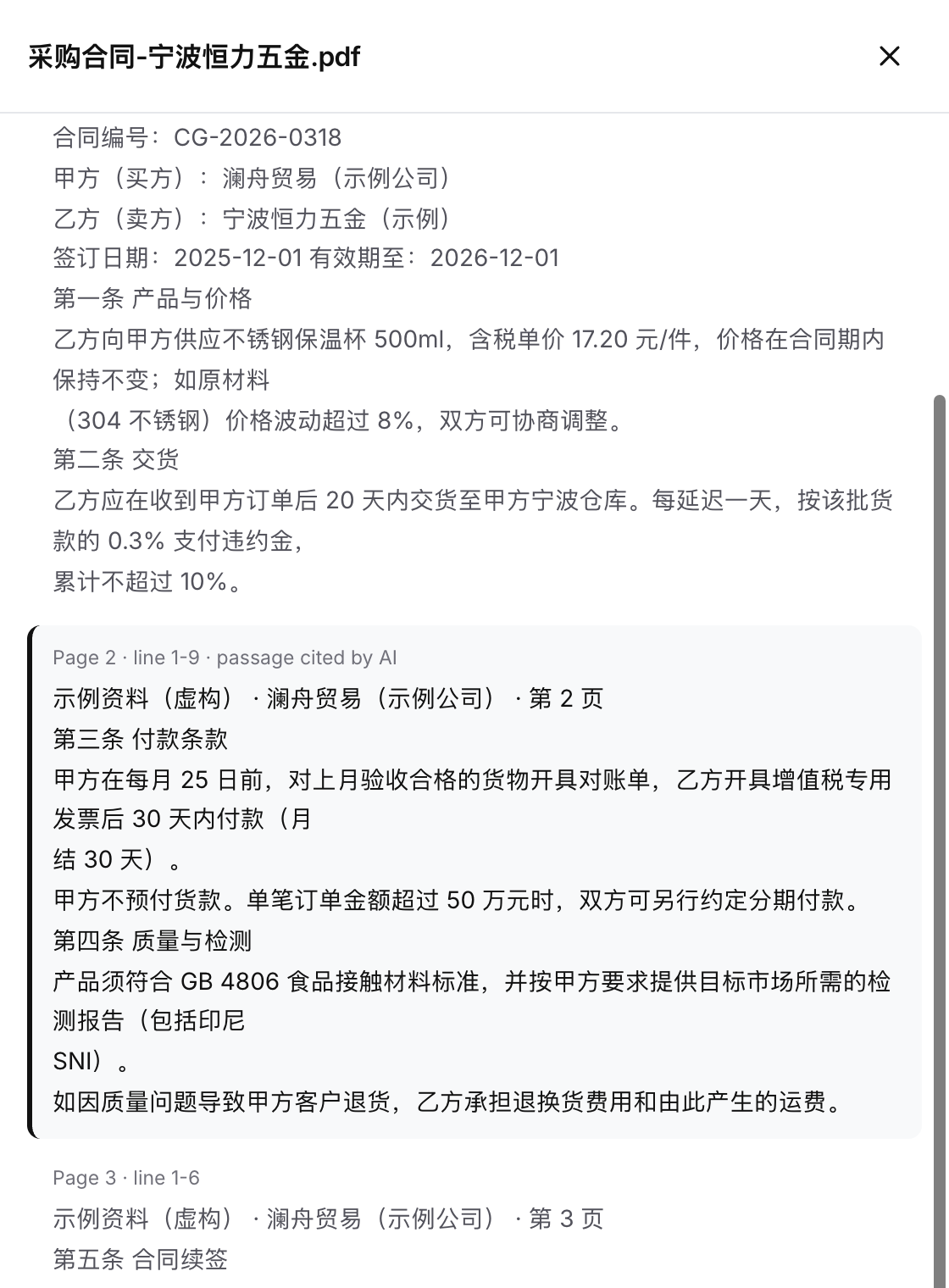
Bring every commitment to its decision-maker.
Use the company’s own authority map. The people-in-control page helps name the manager, owner or specialist responsible for each type of decision.
| Work or consequence | AI preparation | Manager decision | Owner decision |
|---|---|---|---|
| Task breakdown and draft work | List actions, sources and suggested owners | Confirm team assignments and acceptance | Set company priorities |
| Customer terms | Draft wording using confirmed information | Approve terms within the sales mandate | Approve reserved commercial commitments |
| Spending or supplier commitments | Compare requirements and quoted terms | Review the comparison and recommendation | Authorize decisions above delegated limits |
| Changes to records or systems | Describe the requested change and affected work | Check the source and business purpose | Approve changes reserved by company policy |
Start with the goal. Finish with the next action.
Useful inputs are the agreed goal, the relevant source documents, the people involved and the decision rules. The security page explains this website’s handling of information. The product overview follows the same goal-to-task loop across the workspace.
The Chief returns a task plan, linked handoffs, requests for decisions and a progress summary. A Finance Agent can add record-difference questions; a Procurement Agent can add a supplier comparison. Each contribution belongs to a named task and reviewer.
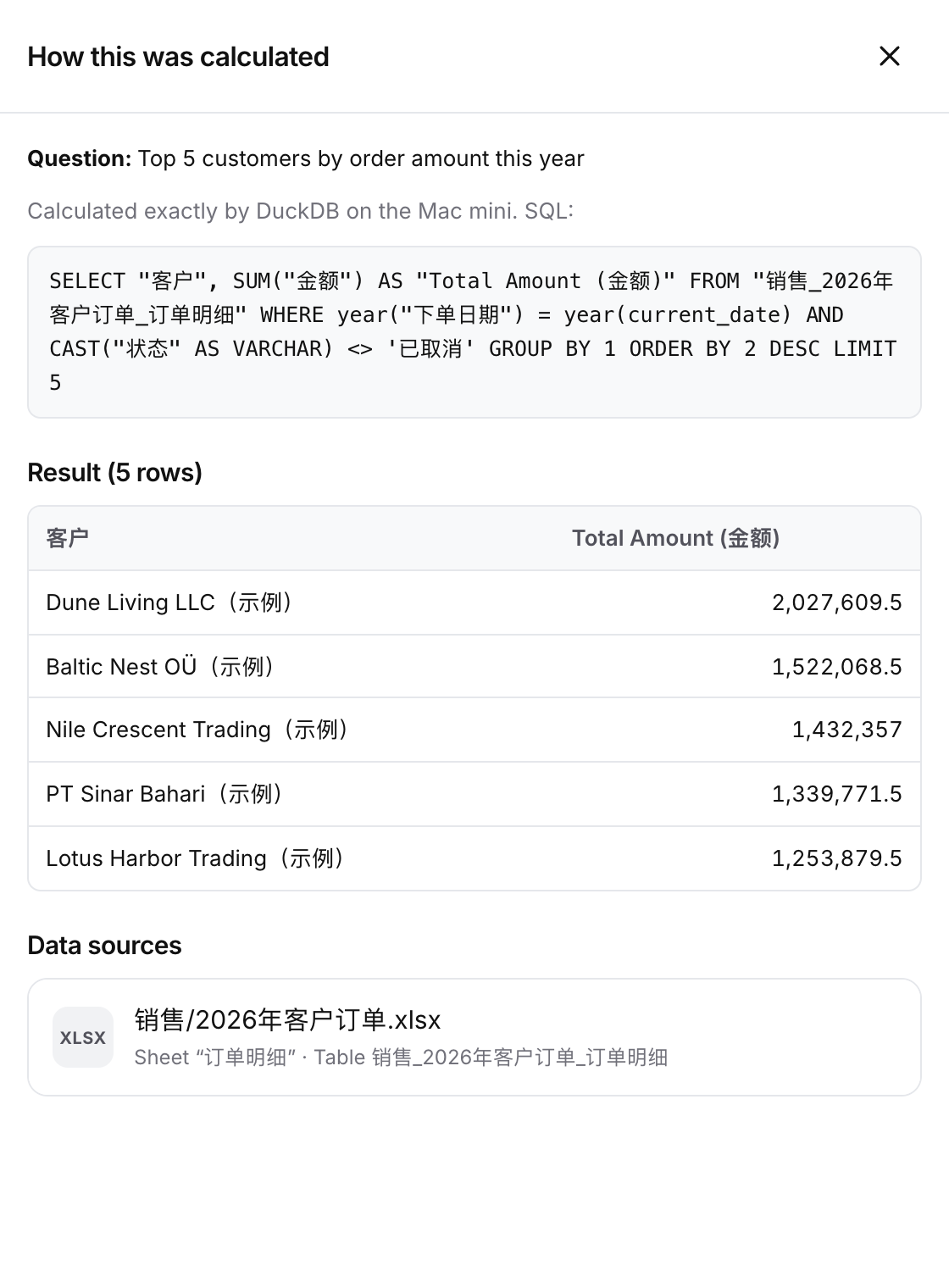
Make the first week easy to evaluate.
For a small business, choose one owner and one recurring process. In a growing company, add the team whose answer determines the next handoff. Use the working templates to capture that agreement before comparing plan scopes.
Start with an enquiry your colleagues already understand. Ask the receiving manager to follow its sources, decide the proposed wording and explain the next action. The company-context form helps you assemble the team and industry details for that discussion.
Questions, answered.
What should I give the AI Chief first?
A goal, a deadline, the expected result and the person who reviews that result. Add the sources and colleagues involved.
How does the Chief divide a goal?
It turns the outcome into named tasks and connects dependencies, such as a customer draft waiting for a delivery check.
Who decides whether a task is complete?
The person assigned to review its result confirms that it meets the agreed task brief.
How does it handle a changed source?
It brings the change together with the tasks that rely on it and asks the responsible person for the next decision.