Give the first Agent a job with a clear finish.
Start with a result a colleague already needs, such as a comparison or a reply draft. Define the sources, the output, and the reviewer, then agree which questions return to a person.
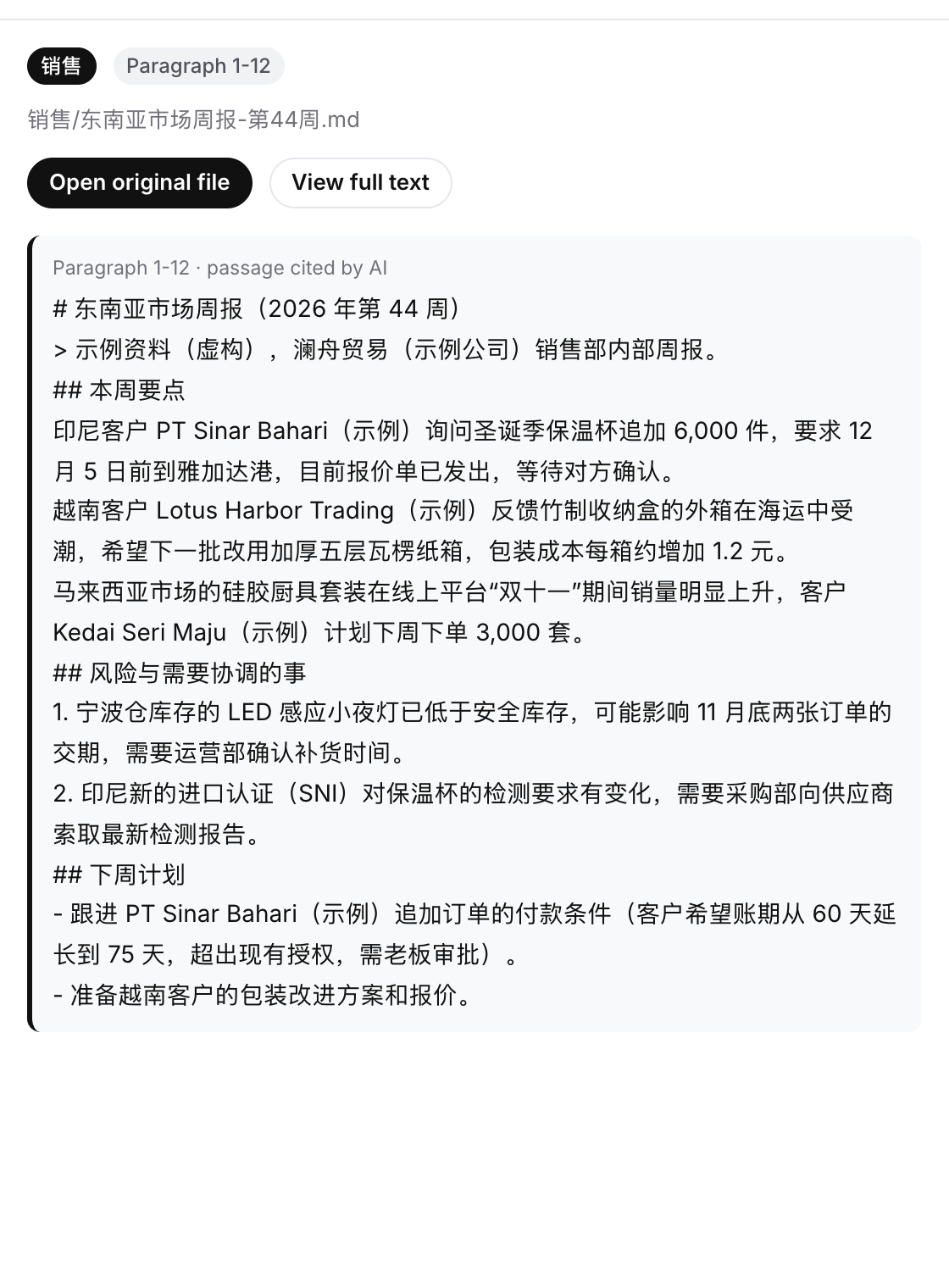
Choose a bounded piece of everyday work.
A Procurement Agent organizes supplier terms; a Support Agent drafts from a selected policy. AI Chief connects the assignment to the wider plan. The Agent overview helps you choose a role.
Describe what the recipient will receive.
For a reply draft, request the wording, its source references, and the questions the policy leaves open. The Agent brief, first goal guide, and approval workflow help connect output and next action.
A first Agent brief
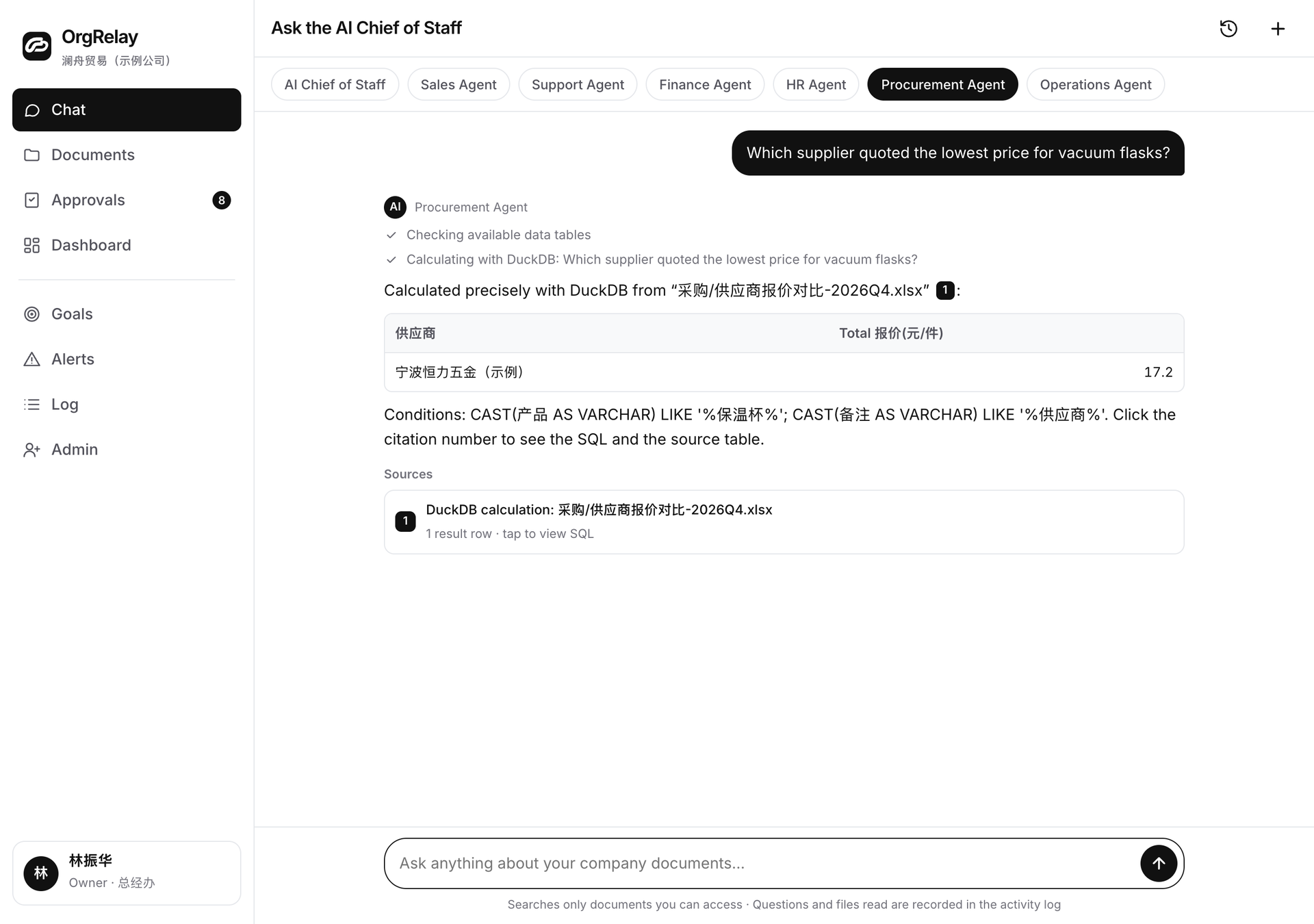
Select sources for the actual question.
A Finance Agent needs the relevant period and records; a reply task needs the applicable policy and case. The company knowledge workflow and source-context article explain what to retain with the material.
| Assignment | Source to select | Selection focus |
|---|---|---|
| Support | Applicable policy and chosen question | Relevant case context |
| Procurement | Selected requirement and supplier terms | Conditions affecting comparison |
| HR | Confirmed role guidance | Information needed for the assignment |
Explain when a question returns to a person.
Conflicting sources, unclear authority, or a request outside the brief should hold the affected conclusion. Record the missing answer with the exception note and route it through the exception workflow.
Inspect one whole cycle.
Choose a case, prepare the output, and ask its recipient to review it against the sources. The Operations Agent helps carry corrections and open questions into the next handoff.
- 01
Choose the case
The reviewer confirms the question, source set and intended output.
- 02
Prepare the draft
The Agent links consequential wording to the selected material.
- 03
Hold a conflicting section
Show the differing sources and ask their owner which applies.
- 04
Review the result
The manager records accepted wording or a correction with its reason.
- 05
Agree the next assignment
Specify the task and source changes that need another review.

Trace the statements that could change someone’s action.
The goal-versus-task article helps connect activity to use. A Sales Agent draft may contain a commitment; an HR Agent task may involve an access decision. Bring consequential choices into an approval packet.
Name the specific change before widening the job.
An extra source, a new recipient, and permission to act are separate changes. Use the cross-team handoff guide, information guidance, and integration requirements. Compare plans or use the company form to describe the next assignment.
A reply-draft assignment to adapt.
Have the support manager confirm the chosen policy and the intended use.
ASSIGNMENT: CUSTOMER-REPLY DRAFT
Use the selected question and confirmed policy excerpt to prepare a reply for the support manager. Return the draft, the source behind each consequential statement, and questions the material leaves open.
The Agent’s task is drafting and source-linked explanation. Sending, compensation, order changes, and new promises remain with authorized people.
If a source conflicts or the question calls for a decision outside the policy, hold that section and explain the missing answer. The support manager checks meaning and intended use, then records accepted wording or a correction with its reason. Carry the result and any remaining question to the next responsible person.
Questions, answered.
What makes a good first assignment?
A useful output, selected sources, a named recipient, and a reviewer who understands the work.
What should a reviewer check?
Meaning, source support, scope, and the questions still needing a decision.
How should a source conflict be handled?
Hold the affected conclusion and name the person who can clarify the source.
How should the job expand?
Specify the additional source, recipient, or action and agree the corresponding review.