Carry the source’s meaning into the next decision.
A source becomes more useful when readers know where it applies and who can explain it. Keep its status, scope, period, and owner beside the information that enters a task or summary.

Choose the source that answers the question.
A folder of quotations may still leave the delivery basis unclear. The company knowledge workflow, task brief, and Procurement Agent help connect selected material to the actual comparison.
Label the record, interpretation, and decision.
The approval boundaries article separates these roles. Sales may summarize a customer request, support may draft from policy, and HR may organize a role requirement. Each result should preserve what its source represents.
| Evidence category | What it expresses | Check before reliance |
|---|---|---|
| Record | What the supplied material states | Authenticity and applicable version |
| Interpretation | What a preparer concludes | Whether the source supports that conclusion |
| Decision | What an authorized person permits | Object, consequence and authority |
Confirm which material governs this task.
Ask the source owner about status, period, and scope. The first goal guide and company setup guide identify the intended use. Record a conflict with the exception note.
Select enough material for a meaningful review.
The reviewer needs the applicable conditions and their context. Use a bounded Agent brief and the first Agent guide to define the source set and the questions it should answer.
Match the conclusion to its source
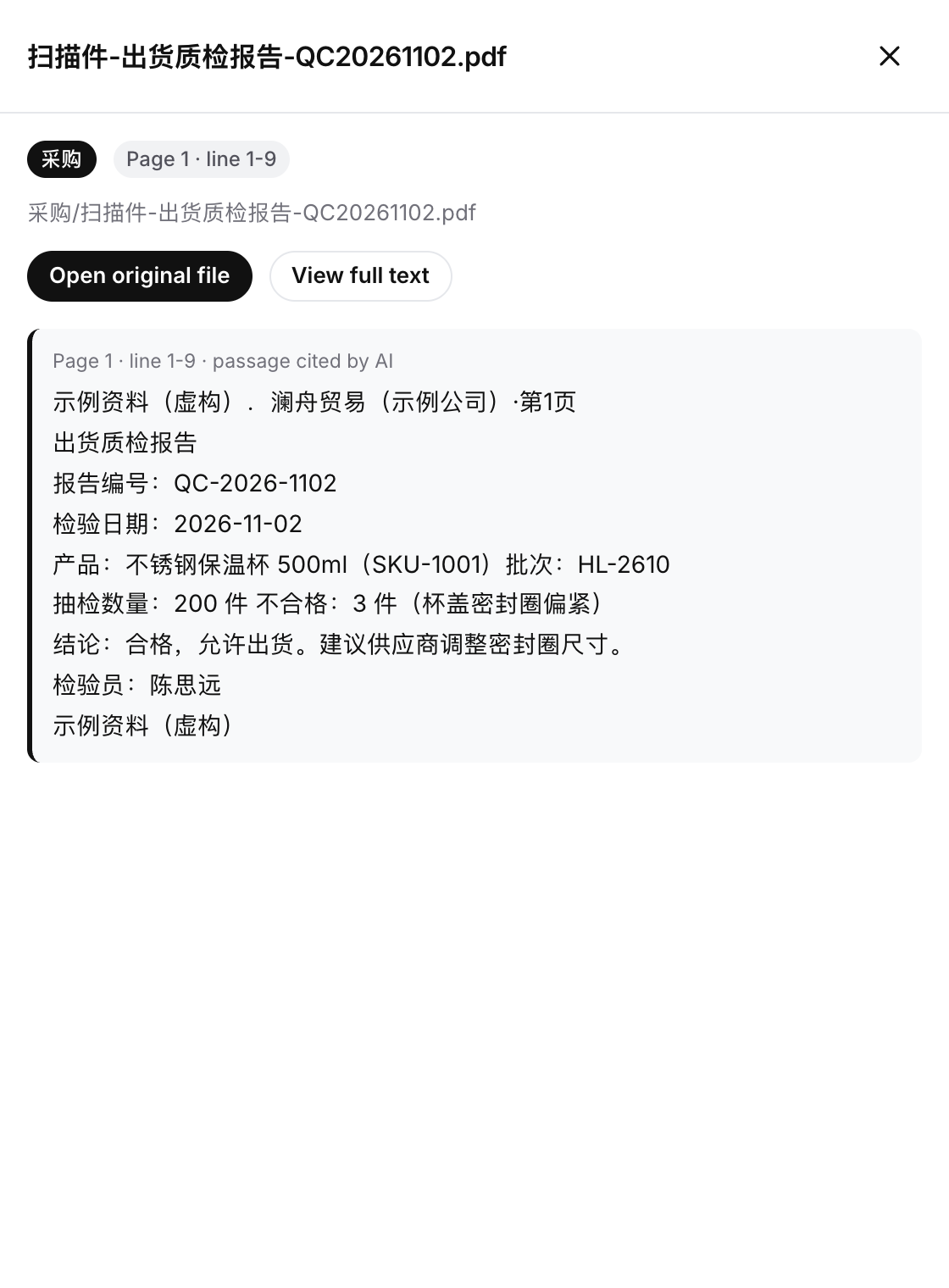
Check the statements that affect the next action.
For a Finance Agent, the record period may change the comparison. For an Operations Agent, a status may refer to a different stage. Trace those statements back to the source and its meaning.
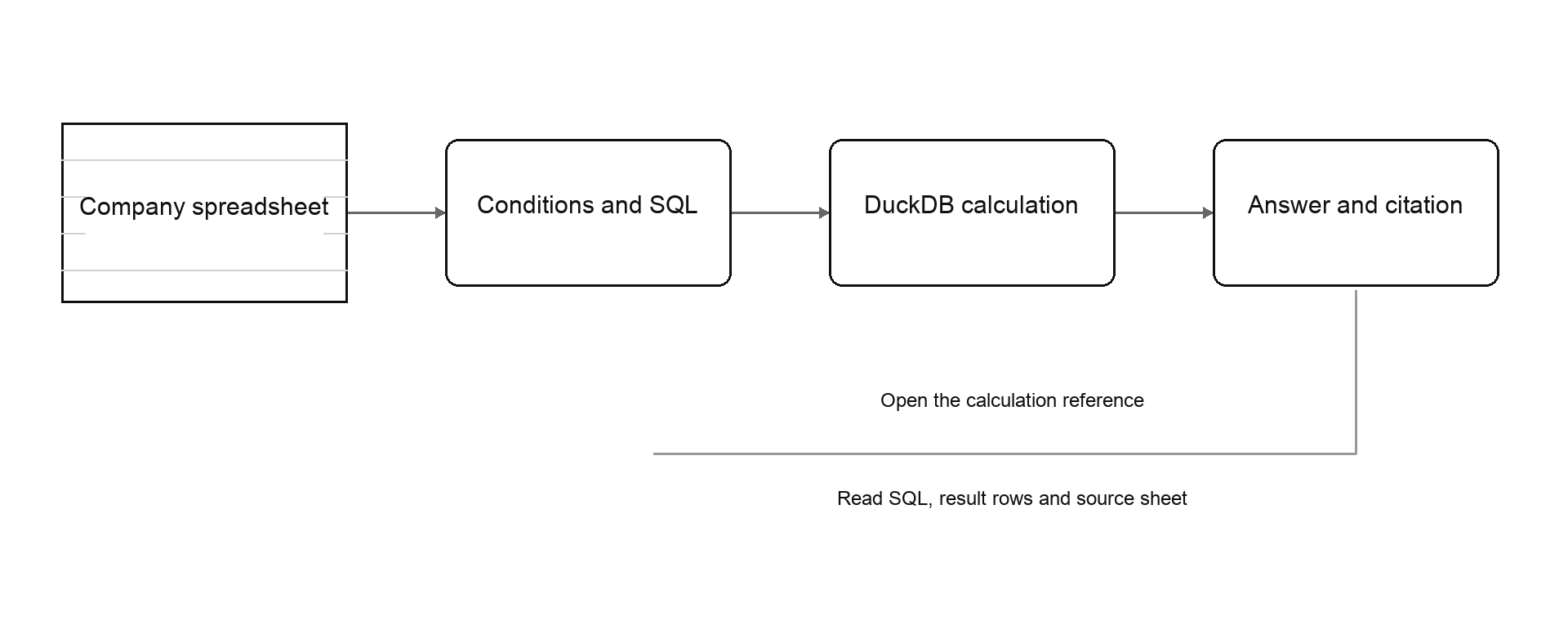
Follow an updated condition into the affected result.
A supplier clarifies a delivery term after a comparison has been reviewed. Identify the rows and recommendation that use it, then ask the reviewer which parts need another look. The cross-team handoff article helps carry the correction forward.
- 01
Identify the applicable scope
The project lead confirms the version used for the assignment.
- 02
Record a new request
The preparer labels its status and affected result section.
- 03
Confirm its applicability
The source owner explains which parts belong in the current work.
- 04
Review the revised output
The recipient checks the result and the authorized person decides any external commitment.
Give the next person a readable source trail.
The handoff template carries the accepted result and remaining questions. An approval packet frames a consequential choice. AI Chief and the exception workflow connect those questions to their owners.
Test source context with one deliberately awkward example.
Pick material from a different period and ask the reviewer whether it fits the task. Use information guidance and integration requirements to frame its audience and system. The weekly goal brief and exception review help agree the next action.
Questions, answered.
What context should travel with a source?
Its owner, status, applicable period, scope, and intended use.
Who chooses the applicable version?
The responsible source owner confirms it for the task.
How should a conflict be shown?
Present the differing material and identify the person who can clarify its meaning or authority.
How much material should be shared?
The information relevant to the recipient’s next action and permitted audience.