Give every buyer a clear next step.
The Sales Agent turns customer enquiries into focused follow-ups. It brings the buyer’s question, the relevant terms and a reply draft together, so your salesperson can move the conversation forward.

Start the reply with the buyer’s actual question.
A buyer asks whether a different specification can arrive before their project starts. The task brief records the requested change, the order context and the account owner. The AI Chief assigns the reply and the delivery check to the right people.
The Agent reads the enquiry alongside the current quotation and relevant company knowledge. It gives the salesperson a draft and highlights the commercial choice that needs approval. The security page explains how this website handles the information entered here.
Six useful jobs in the customer follow-up.
Use alerts to surface a waiting answer and the dashboard to follow the enquiry set. Procurement contributes supplier terms, while operations follows the delivery handoff.
- 01
Summarize the enquiry
Capture the buyer’s specification, intended use, requested date and question. Keep the latest message with the order or quotation it refers to.
- 02
List the commercial questions
Highlight the delivery, quantity or specification detail the account owner needs to settle before sending a complete answer.
- 03
Draft the follow-up
Write a reply around the customer’s question and confirmed terms. Give the salesperson a clear proposed next action, such as requesting a specification choice.
- 04
Bring the decision to the manager
Show the proposed wording, the quotation it uses and the change it would make to the customer’s expectation.
- 05
Ask another team a precise question
Give purchasing or operations the exact condition to check, the source reference and the date the customer reply needs their answer.
- 06
Summarize the week’s conversations
Group completed replies and the questions awaiting a customer, supplier or manager. Name the owner of every next action.
A sales week in a 30-person trading company.
The sales manager selects the week’s enquiries and asks the team to give each buyer a clear next action. One buyer is considering a specification change that also affects dispatch.
- 01
Monday · Choose the enquiries
The manager names the enquiry set, the account owners and Friday’s review. The Agent summarizes each buyer’s question and links it to the current quotation.
- 02
Tuesday · Draft the next reply
The salesperson adds the customer’s intended use. The Agent drafts a specification-confirmation message and lists the dispatch detail for operations to check.
- 03
Wednesday · Connect the delivery answer
Operations confirms a revised dispatch condition. The Agent places that answer beside the customer draft and highlights the sentence that needs the manager’s decision.
- 04
Thursday · Agree the commercial wording
The manager reviews the quotation, delivery answer and reply together. The owner reviews a commitment reserved by the company’s authority rules.
- 05
Friday · Review the next customer actions
The team sees which buyers received a reply and which conversations await a decision. Each follow-up has an account owner and a next date.
Give the Agent a focused assignment.
A trading team might ask for specification-confirmation drafts. An ecommerce team might ask for an order-question summary and the next service response. Choose a defined set of conversations and one reviewer.
Use the people-in-control guide to agree the customer commitments the salesperson, manager and owner can approve.
- 01
Choose the conversation and sources
Name the buyer’s question, the relevant order or quotation, the latest customer message and the person who receives the draft.
- 02
Read the reply against the evidence
Check the specification, dates and requested next step. Ask the Agent to revise the exact sentence that needs a clearer source or a better customer explanation.
- 03
Authorize the next customer action
The account owner reviews the draft and sends the agreed response through the team’s communication process. Managers handle changes within their mandate.
A customer follow-up preparation packet
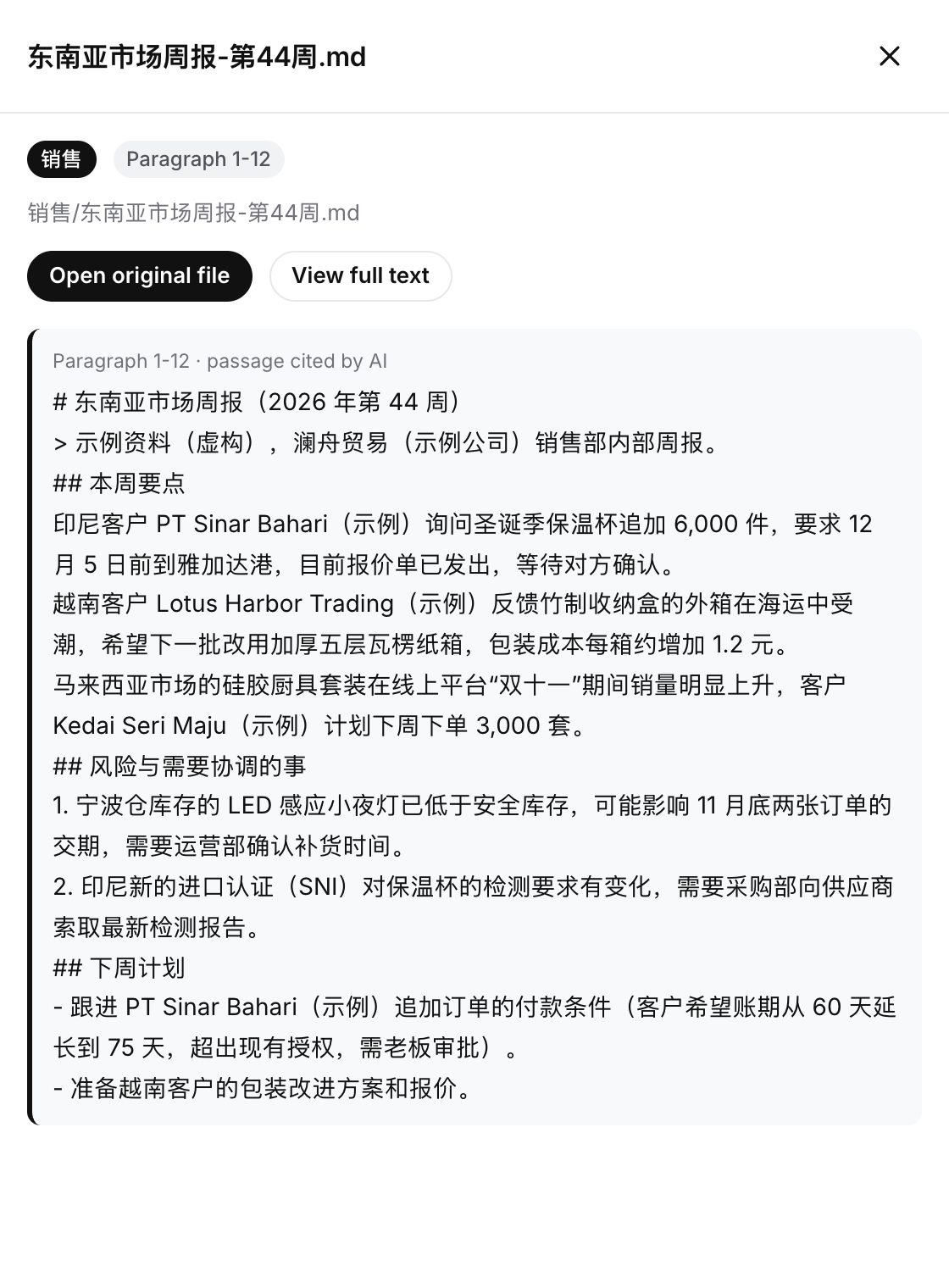
Keep customer commitments with the people who own them.
The owner sets the company’s reserved decisions. The manager applies the sales mandate to the proposed customer reply.
| Activity | Agent preparation | Manager approval | Owner or reserved authority |
|---|---|---|---|
| Enquiry summary | Summarize the question and source references | Confirm the selected enquiry set | Set business priorities |
| Customer reply | Draft wording using the current quotation and confirmed details | Approve wording and commitments within mandate | Approve reserved commercial terms |
| Specification or delivery change | Highlight the affected promise and supporting information | Judge the change with purchasing or operations | Authorize commitments above delegated limits |
| Follow-up report | List replies, open questions and next owners | Confirm the team’s next actions | Choose significant trade-offs |
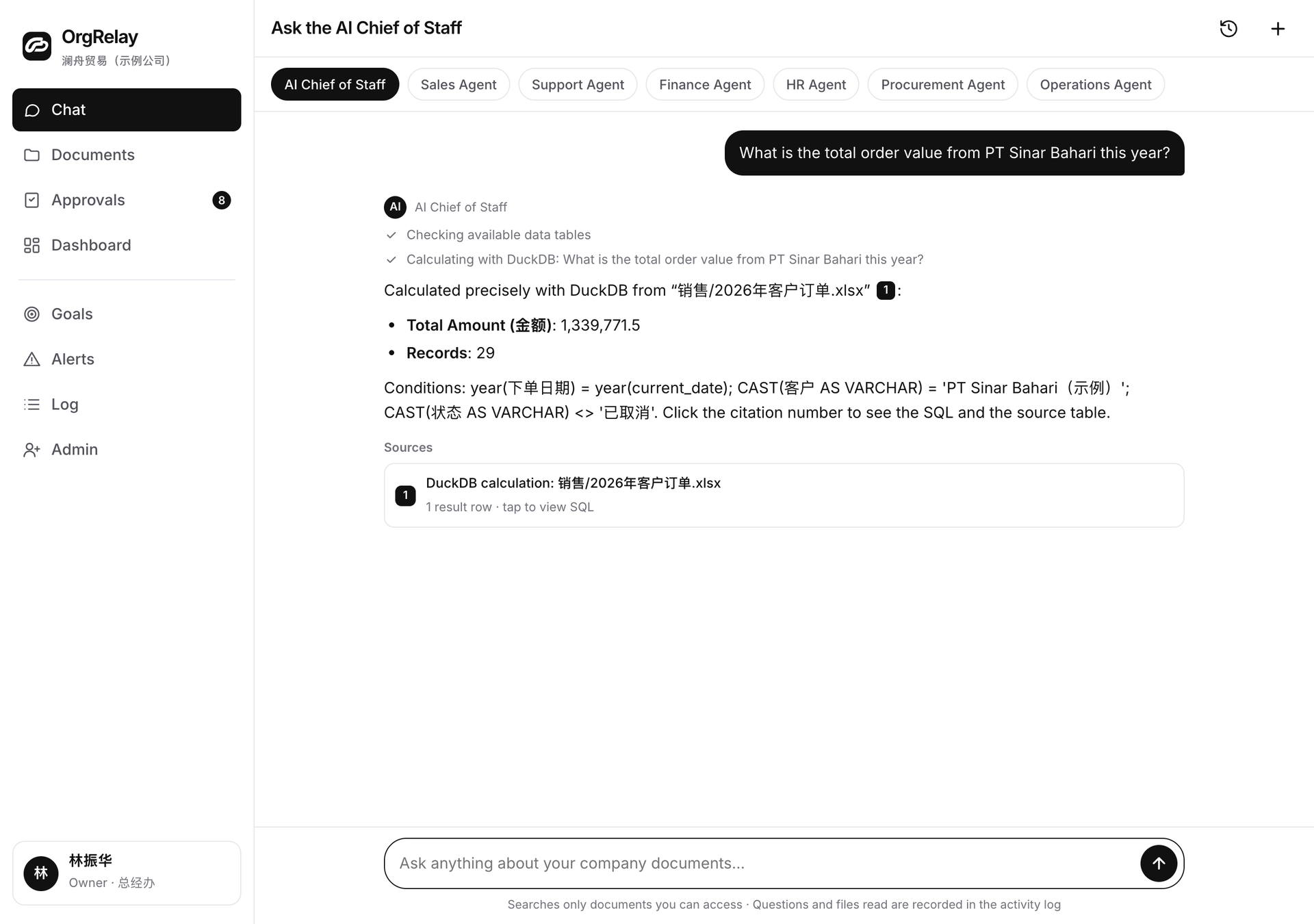
A useful draft keeps its source within reach.
Bring the enquiry, quotation, confirmed delivery information and account owner into the task. Use company knowledge for the relevant product notes or sales instructions.
The output is a customer-focused reply, the sources behind its key terms, questions for other teams and the reviewer’s next decision. Integration requirements help specify which source fields that workflow needs.
Start with one type of follow-up.
Pick a recurring question your salesperson understands well, such as a specification confirmation. Use a working template to describe the question, its sources, the reply and the reviewer.
Compare plan scopes around the colleagues and Agent roles involved. The company-context form lets you review the team and industry details in your browser.
Questions, answered.
Which sales task is a good first assignment?
A focused follow-up such as confirming a specification, summarizing an enquiry set or drafting a reply from an agreed quotation.
What information helps the Agent write a useful reply?
The buyer’s actual question, the latest relevant message, the current quotation and confirmed conditions such as specification and delivery.
Who approves commercial commitments?
The company’s sales mandate assigns decisions to the account owner, manager and company owner. The draft brings the proposed commitment to that person.
What appears in the weekly sales summary?
The selected enquiries, completed replies, questions awaiting an answer and the owner and date of each next customer action.