Find the source that answers the task.
Bring the relevant company instructions and documents into the work at hand. Employees and Agents can use the right version, follow its context and return a source question to the person who owns it.
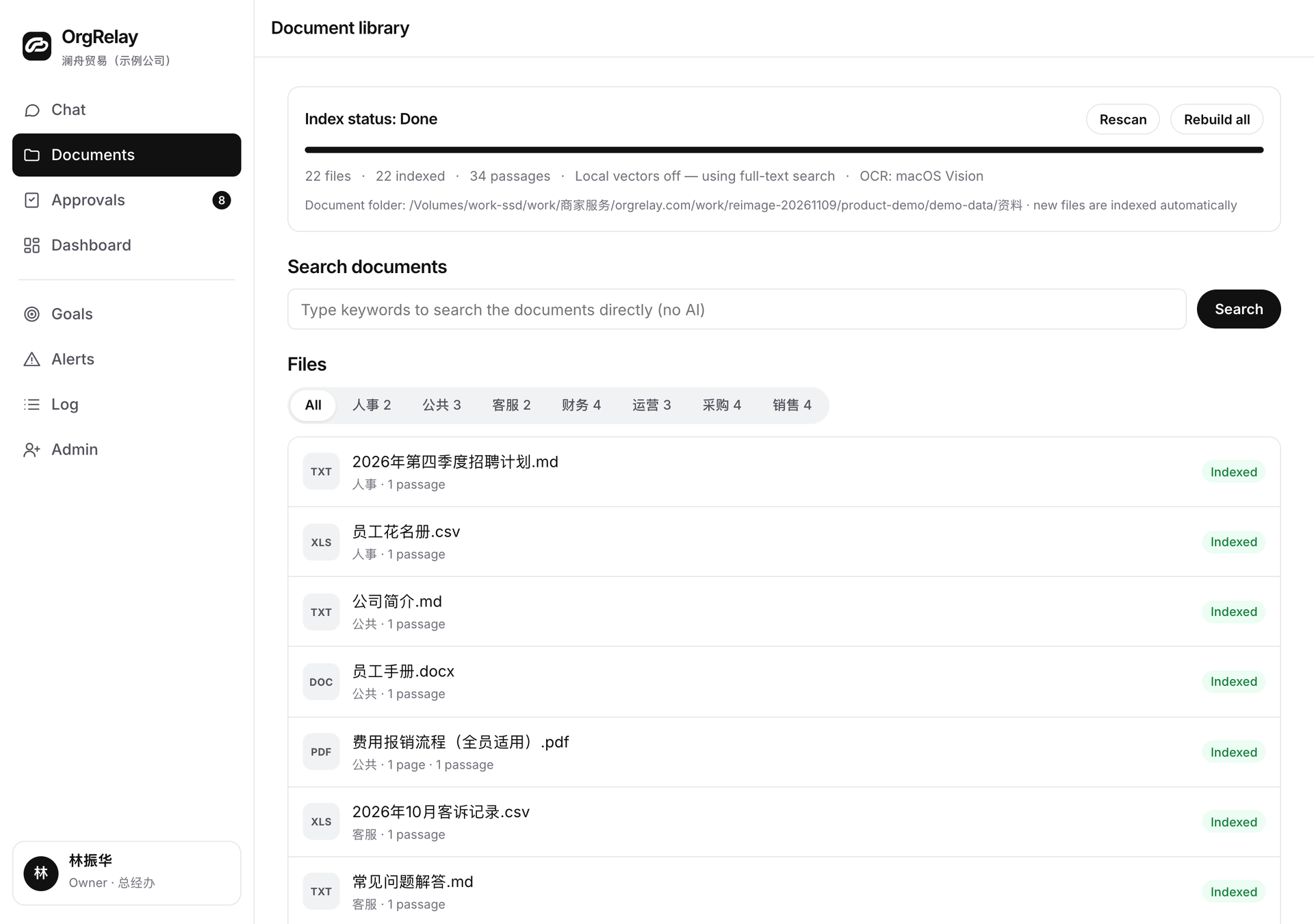
Start with the question the colleague needs to answer.
A new employee needs the instructions for their first client handoff. The task brief identifies the role and deliverable. The HR Agent assembles a first-week checklist, while customer service uses the policy relevant to the customer’s question.
The AI Chief connects those jobs to the company goal. The security page describes this website’s information handling, and integrations help define the source records a workflow needs.
Keep the source useful when the work changes hands.
A Procurement Agent needs the requested specification and supplier terms. An Operations Agent needs the instructions and status behind the next handoff. Select sources around that specific job.
Use approvals for a decision that changes company guidance. Alerts bring a version question to its owner, and the dashboard shows the handoff waiting for the answer.
- 01
1 · State the work question
Ask which instruction applies to the role, customer situation or delivery being discussed. Name the colleague who needs the answer.
- 02
2 · Identify the document and owner
Record the document’s title, version, relevant period and responsible person. Ask that owner to confirm the section the task uses.
- 03
3 · Connect the answer to the passage
Keep the selected text or reference beside the checklist, reply or summary it supports. The reviewer can then follow the same basis.
- 04
4 · Resolve a version question
Bring the relevant passages and their difference to the document owner. The task records the owner’s answer and the version to use.
- 05
5 · Review the result in context
The receiving colleague checks that the instruction applies to this job and that the result gives the next person a useful action.
A source trail for an onboarding checklist
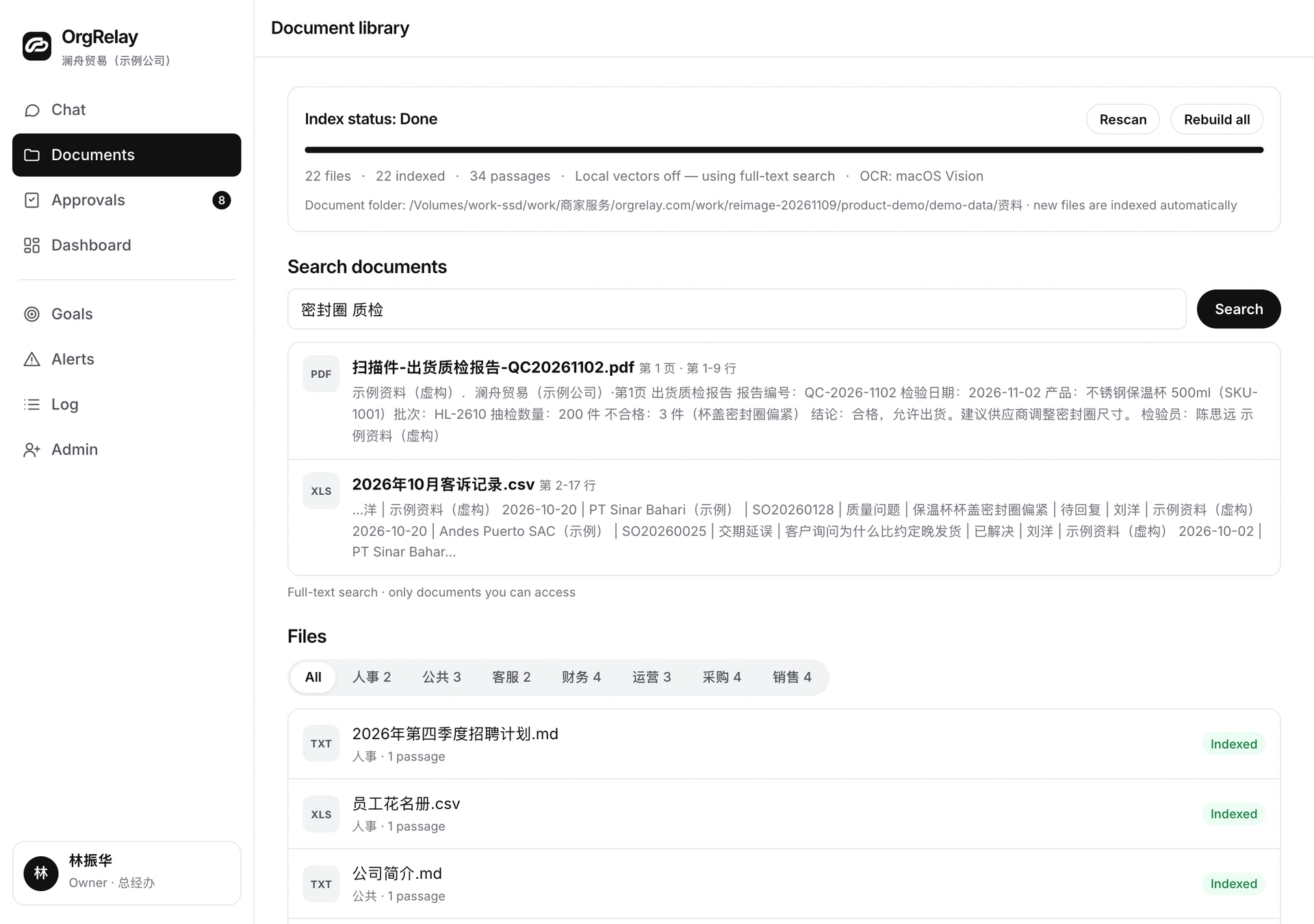
An employee’s first-week checklist follows the right guidance.
A 50-person services company is onboarding a colleague into a client-delivery role. The manager wants a first-week checklist that reflects the team’s actual handoffs and the person who receives each result.
- 01
Monday · Name the role and recipient
The manager identifies the first-week activities, the role instructions and the colleague who will review the checklist.
- 02
Tuesday · Confirm the current version
The HR Agent highlights two supplied instruction versions. The source owner confirms the applicable passage and explains the change.
- 03
Wednesday · Assign the review
The manager checks that the selected instructions fit the employee’s role. A change to company policy goes to its designated approver.
- 04
Thursday · Read the checklist as a team
The new colleague and manager follow the tasks, sources and receiving people together. Questions return to the person who owns the relevant instruction.
- 05
Friday · Carry the context into daily work
The checklist identifies the current guidance and the next handoff. The employee can return to those references when performing the same work.
People own the company guidance and the decisions that use it.
The people-in-control guide helps name the source owner, task reviewer and person authorized to change the company’s instructions.
| Knowledge activity | AI preparation | Manager responsibility | Owner or reserved decision |
|---|---|---|---|
| Find relevant guidance | Locate supplied passages and source references | Confirm their relevance to the team’s work | Set responsibilities for company guidance |
| Resolve a version question | Show the relevant versions and their difference | Ask the source owner and apply the answer | Approve reserved policy changes |
| Use a source in a task | Draft the checklist, reply or summary with references | Review its fit to the task and recipient | Authorize reserved business commitments |
| Share a result | Identify the selected passages and intended reader | Confirm the appropriate task audience | Approve access beyond delegated authority |
Return an answer the next person can follow.
Employees need the answer, the relevant source and the colleague who can explain it. A Finance Agent may attach the record passage behind a difference; a Sales Agent may attach the specification behind a customer reply.
The output joins the task’s question, the selected document or passage, the explanation and any follow-up for the source owner. The reviewer can use the answer in the work and keep its context through the handoff.

Try a familiar document and a real work question.
Ask the owner or manager to choose a recurring question and the colleague who can confirm the answer. Include a version change in the discussion so the source owner can explain how it should be handled.
Use the working templates, compare plan scopes and review company details through the company form. Start with a source your team can explain.
Questions, answered.
Which document should we use first?
Choose a current instruction or specification the team uses regularly, with a person who can explain its version and scope.
What makes an answer useful?
It answers the task’s question, points to the relevant passage and gives the receiving colleague a clear next action.
How are version questions handled?
The task brings the relevant versions and their difference to the source owner, then records the confirmed basis for the work.
Who decides whether guidance applies?
The responsible source owner and task reviewer check its fit to the role, business period and work being discussed.