Find the difference. Follow the evidence.
Give the finance reviewer a focused view of the records that need attention. The Finance Agent lines up supplied information, highlights differences and drafts the questions that help a qualified person reach an answer.

Bring the related records into the same review.
An expense claim and its receipt may show different dates or references. The task brief states which records to compare, the period to cover and the finance colleague who reviews the result.
Use company knowledge for the applicable company instructions. Approvals route a proposed record change or consequential decision to the authorized person. The security page explains this website’s information handling.
Return the difference with its source context.
Useful inputs are the selected records, their document references, the relevant business period and the person who explains them. Company knowledge brings the applicable company guidance into the task.
The output shows the compared fields, the visible difference, the source references and a question for the reviewer. For an expense review, that may mean the claim, the receipt, the business-purpose explanation and the company rule being applied.
Finance decisions stay with the company’s authorized people.
Use the people-in-control guide to name the qualified reviewer, the person who can amend a record and the approver of any resulting payment or commitment.
| Activity | Agent preparation | Manager or qualified reviewer | Owner or reserved approver |
|---|---|---|---|
| Record comparison | Line up supplied records and references | Check the relationship and investigate differences | Set responsibility for company records |
| Clarification request | Describe the field difference and source question | Obtain and assess the business explanation | Decide matters reserved by company policy |
| Record adjustment | Summarize the proposed correction and its basis | Authorize changes within the reviewer’s role | Approve reserved or consequential changes |
| Payment or commitment | Assemble the supplied supporting information | Review under the company’s finance process | Authorize reserved financial commitments |
Six useful jobs around the finance review.
The AI Chief connects the record task to the team’s goal. Alerts bring a source question to its owner, and the dashboard follows the next action. Operations can help trace the business handoff behind a record.
- 01
List the record set
Name the supplied files, period and document references the reviewer wants to examine.
- 02
Line up related references
Show candidate relationships between a claim, receipt, order or other selected record for the reviewer to check.
- 03
Highlight the field difference
Point to the specific date, reference or supplied value that differs, keeping both source contexts visible.
- 04
Draft the source question
Ask the responsible colleague to explain the record, its business purpose or the relevant condition.
- 05
Bring the review materials together
Put the selected records, applicable company instruction and clarification beside the finance reviewer’s task.
- 06
Record the review outcome
Summarize the reviewer’s answer, any authorized next action and the person responsible for following it through.
Give the reviewer a specific comparison.
The owner and manager choose the review scope and authority. A Procurement Agent may supply purchasing context; a Sales Agent may supply the customer reference behind a record.
For an external source, integrations define the record fields and access the task needs.
- 01
Choose the records and question
Name the selected documents, period, fields and receiving finance colleague. State what the comparison should help them resolve.
- 02
Check the source trail
Read the highlighted difference against the original records and obtain the business explanation from its owner.
- 03
Assign the authorized next action
The qualified reviewer reaches the finance judgment. The company’s process determines who changes a record or approves a payment.
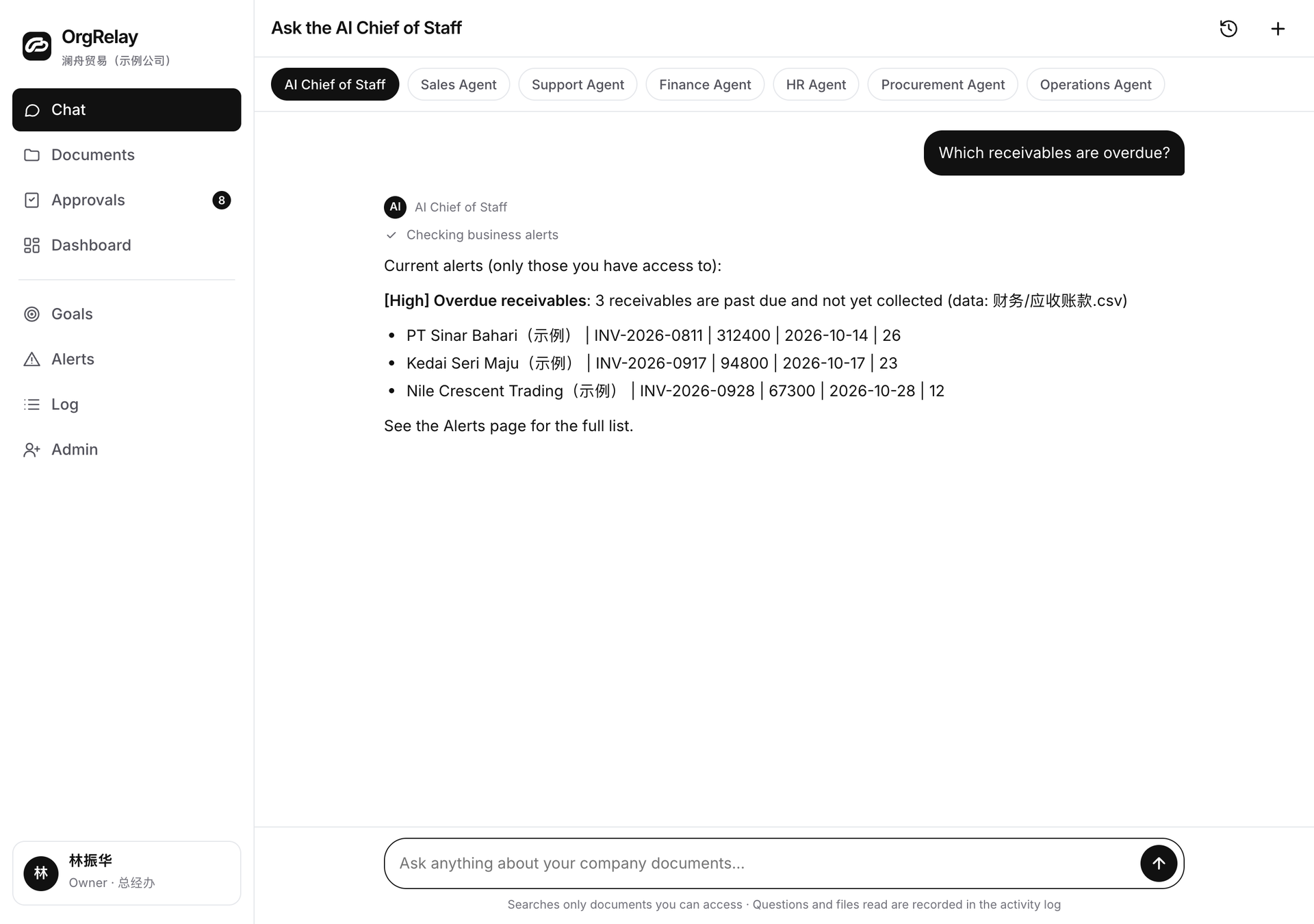
A review packet for supplied record differences
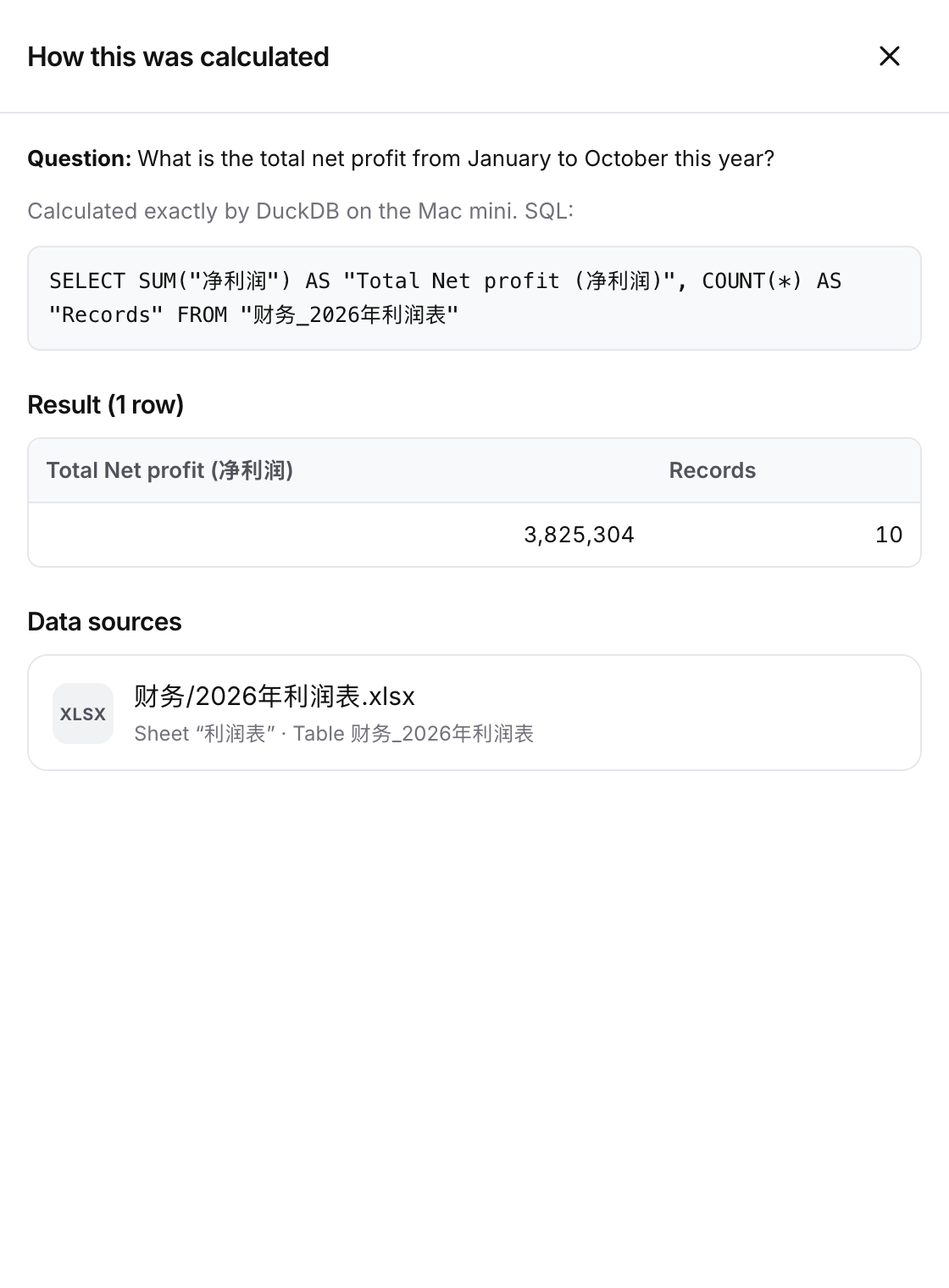
A trading company follows an expense-record question.
The finance reviewer selects expense claims and their supporting receipts for a defined period. One claim has a reference or date the reviewer wants explained by the business owner.
- 01
Monday · Define the comparison
The reviewer names the record set, period and fields, and identifies the colleague who explains each source.
- 02
Tuesday · Highlight the difference
The Agent lines up the claim and receipt, showing the differing field with both document references.
- 03
Wednesday · Ask the business owner
The clarification request asks for the business-purpose explanation and the source detail needed by the reviewer.
- 04
Thursday · Review the answer
The qualified reviewer reads the explanation against the supplied records and applicable company instruction.
- 05
Friday · Record the next action
The team records the reviewer’s conclusion, the authorized follow-up and the person who carries it out.
Choose a comparison the reviewer can explain end to end.
Start with a working brief describing the records, period and finance question. Have the receiving reviewer agree the sources and the result they need.
Compare plan scopes around the team and Agent roles involved, then use the company form to review the basic company context.
Questions, answered.
What is a useful first finance assignment?
A focused comparison of selected records, such as an expense claim and its receipt, for a named finance reviewer.
What does the Agent return?
The compared fields, source references, visible differences and a clarification question for the responsible person.
Who makes the accounting judgment?
The qualified finance reviewer or designated specialist assigned by the company.
Who changes a record or authorizes payment?
The people authorized by the company’s finance process; the task identifies the reviewer and the next decision.