Keep the service request connected to the order.
Help your team answer the customer with the right case history, policy and operational context. OrgRelay joins support, fulfilment and financial review so each proposed remedy reaches the appropriate person.

Begin with what the customer is asking now.
A goal brief defines the case and the response needed. The company knowledge design retains relevant guidance. The AI Chief connects the operational questions, while the Support Agent organises the customer’s stated request and the case history a colleague needs.
Monday: review a set of post-purchase enquiries.
A 50-person online retailer is resolving cases that involve support and fulfilment. The Operations Agent assembles order context, the Procurement Agent helps with supplier questions, and managers agree which remedies require explicit approval.
Give the receiving colleague a specific case brief.
Identify the order, the customer’s current request and the response already confirmed. A Sales Agent can help organise product or commercial context. The manager’s workflow connects the case to the colleague able to check it and the person able to accept a remedy.
An after-sales question with its source context
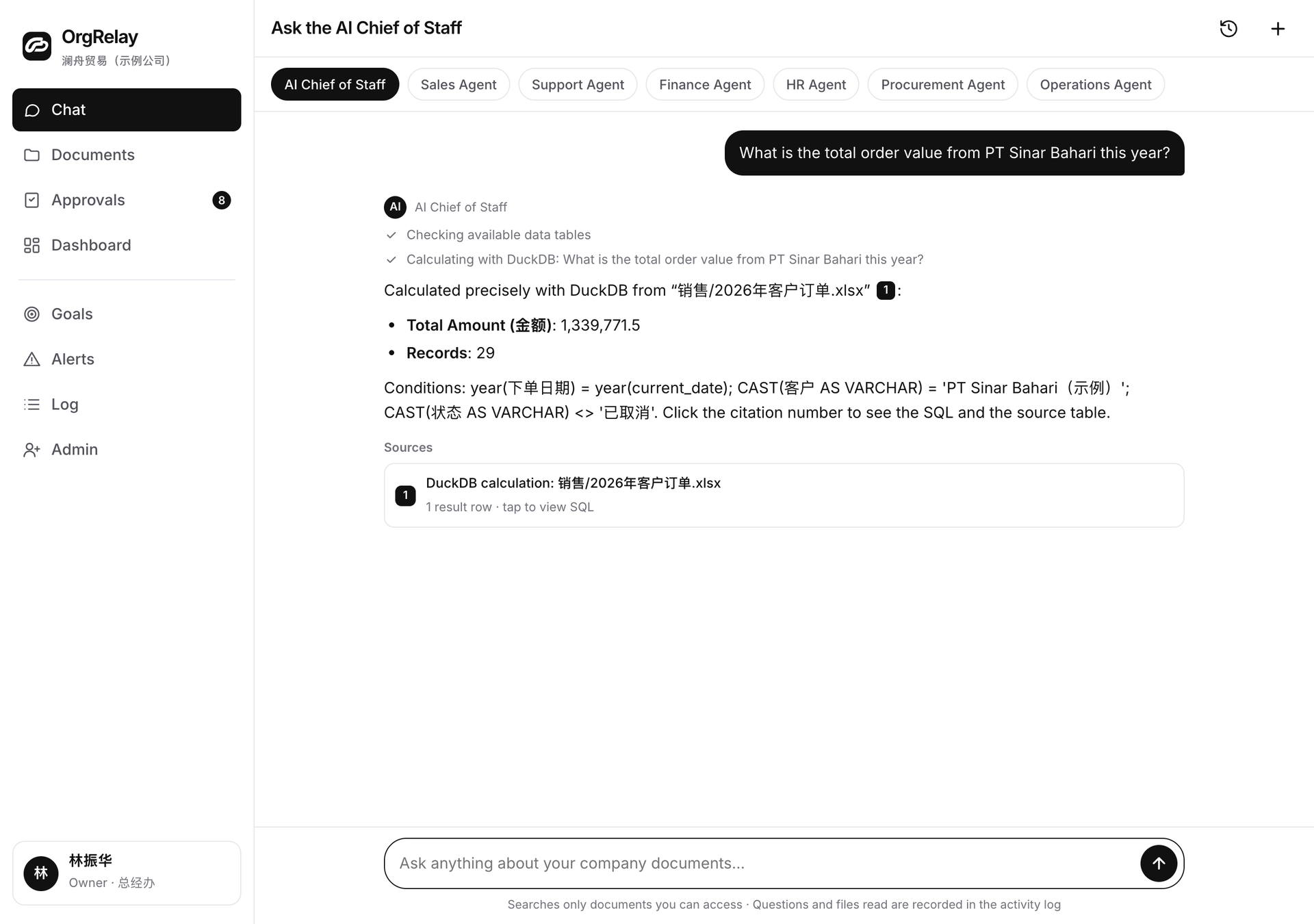
Keep location, availability and fulfilment progress distinct.
Use the integrations page to specify which record supports each question. The exception workflow routes a changed or incomplete source to its owner. A colleague verifies the operational meaning before using it as the basis for the next customer response.
Make the proposed remedy easy to review.
A Finance Agent organises relevant transaction questions. The reviewer considers the request, applicable policy and checked case context. The trust model identifies the decision responsibility, and the employee scenario explains what the colleague needs to continue the work.

Wednesday: the customer changes their request.
A replacement enquiry becomes a refund request. The management dashboard shows the revised question and affected work. Support updates the case, fulfilment confirms the operational facts, and a reserved decision reaches the person described in the owners’ scenario.
Let each role answer the question it owns.
Use the security page when selecting the audience for the case material. Give reviewers the relevant source context and state the action being requested.
| AI preparation | Manager verification | Reserved decision |
|---|---|---|
| Organise the customer request | Support confirms case context | Service lead reviews the proposed response |
| Check fulfilment information | Operations verifies the source | Responsible role accepts its operational meaning |
| Propose a financial remedy | Finance checks relevant records | Authorized reviewer decides the action |
Friday: leave each case with a next owner.
The product overview connects case context, review and action. Use the resource library to record accepted content and outstanding conditions. The growing-company page adds explicit receiving responsibilities where support, operations and finance work across units.
Inspect a case whose remedy changes during review.
Ask the support colleague and reviewer to explain the current request, its policy basis and the decision still needed. Compare plan scope against that handoff, then use the company-interest preview or demo to outline the case types your team handles.
Questions, answered.
What belongs in a service case brief?
The current request, corresponding order, relevant history, policy basis and the next responsible person.
Who decides a refund?
The company’s authorized reviewer considers the policy, checked transaction context and proposed action.
How should an order-source discrepancy be handled?
Identify the record and the affected response, then ask its operational owner to confirm the meaning.
What should a case review return?
The accepted response or remedy proposal, remaining conditions and a clear next owner.