Send the result with the context it needs.
The next team can act when it understands what it has received and what remains open. Use this note to agree the result, its intended use, and the person responsible for each next step.

Start with the recipient’s next action.
The cross-team handoff article explains the gap between sending and acceptance. An Operations Agent helps organize the transfer, while goals and tasks and the approval workflow identify the result and decisions.
Copy the note for one handoff.
Tie it to the weekly goal brief and check the information guidance when selecting sources for the recipient.
HANDOFF: CUSTOMER REQUIREMENT TO OPERATIONS
Sender: sales owner. Recipient: named operations coordinator. Purpose: review the information needed before the next order step.
Result supplied: requirement summary, source references, applicable terms, and open questions. Keep requested dates, estimates, and confirmed commitments clearly identified by their status.
The sender identifies sections ready for review. The recipient states which sections are accepted for the specified internal use and which need clarification. Source questions return to their owners; commercial decisions go to authorized people.
Agree the review time together. When a source changes, mark the affected section and the reason. Close the handoff with accepted work, corrections, open questions, and the next responsible person.
Say what the recipient can use it for.
A Sales Agent summary may support an internal order review. Keep the company knowledge trail with the terms and questions that affect that use.
Give each open question an owner and an effect.
An exception note states the changed condition. AI Chief links affected work, and the exception workflow routes the next question.
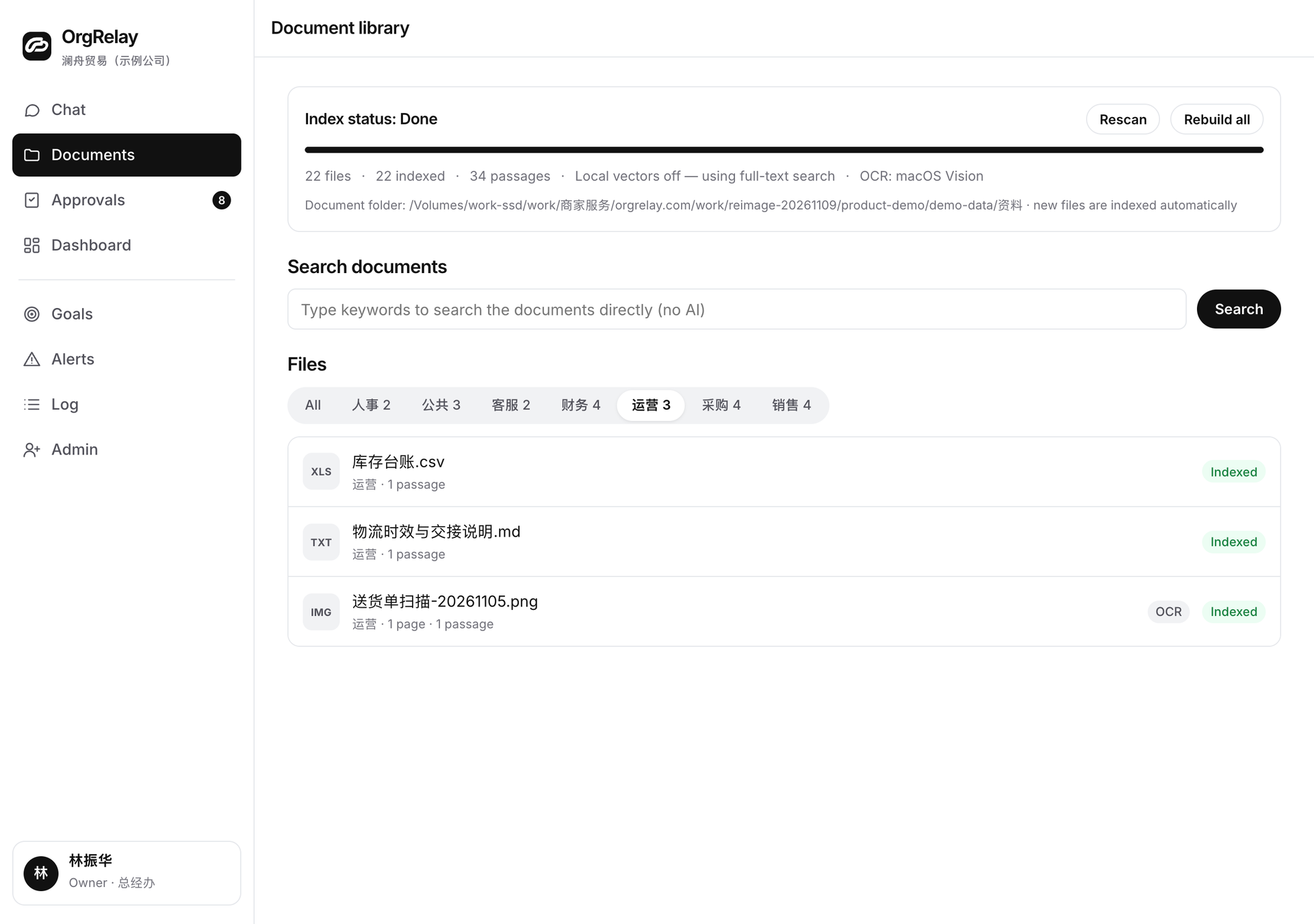
The receiving person's view
Ask for the decision the recipient can make.
Use an approval packet for a commitment. Procurement and Finance can contribute their respective source material and questions.
| Requested action | Recipient checks | Separate responsibility |
|---|---|---|
| Clarify a source | Status, scope and meaning | Commercial authorization |
| Review an output | Fit with the brief and source basis | Permission to act |
| Authorize a step | Action, conditions and authority | Other source confirmations |
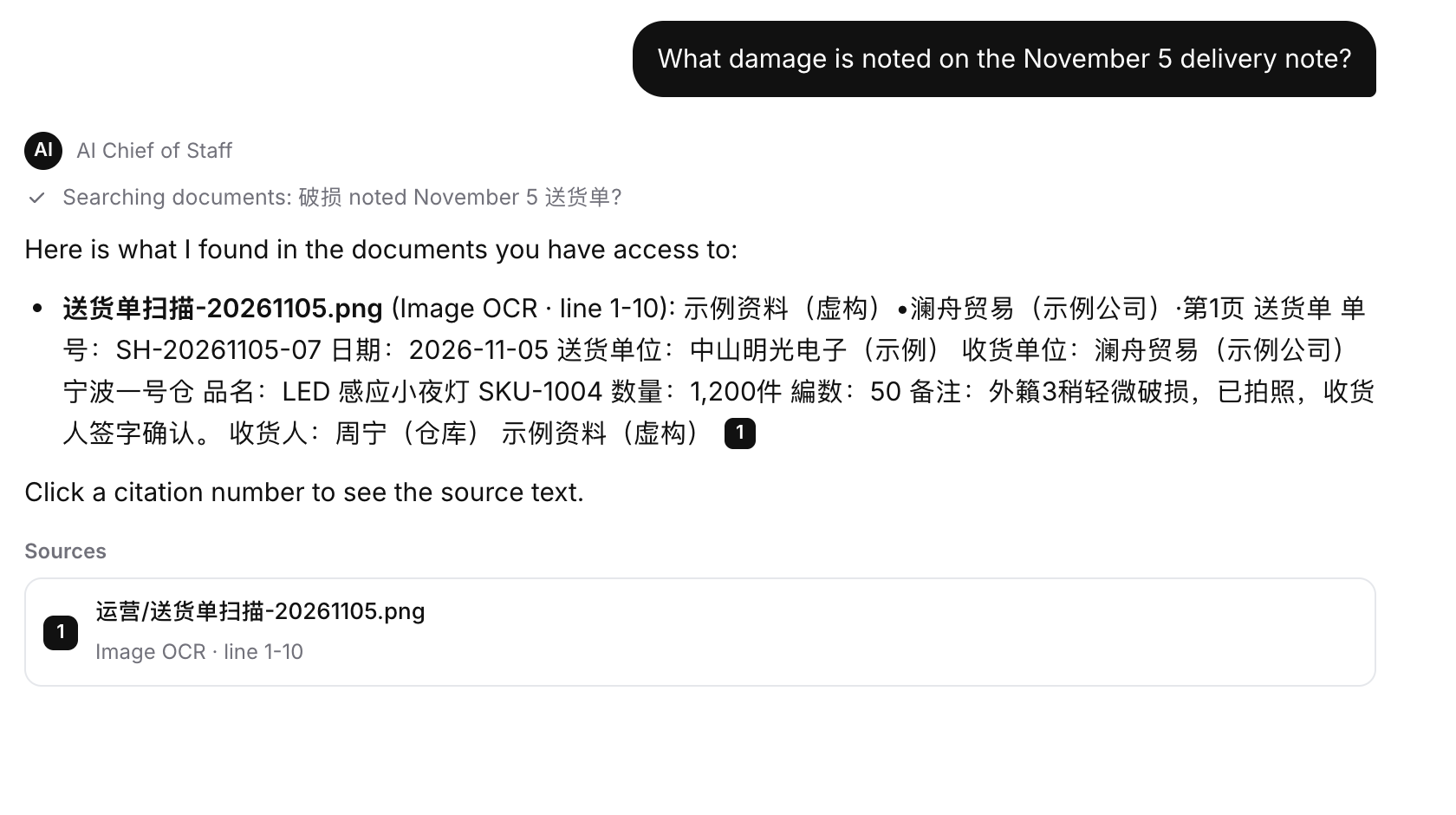
Make acceptance a specific statement.
The recipient names the sections accepted and their purpose. Manager scenarios show how a review can return a correction or accept part of a package.
- 01
The sender explains the result
State the version, source and intended next use.
- 02
The recipient reads the request
Identify accepted sections and the information needed for the rest.
- 03
The coordinator finds the right owner
Send a specific question with its relevant context.
- 04
The teams record the next state
Capture the correction, acceptance and responsible person for the following step.
Update the sections affected by a change.
Use an exception review to decide the next step. The first Agent guide, integration requirements, and dashboard help connect sources, work, and its current state.
Questions, answered.
What does acceptance mean?
The recipient says the specified sections are sufficient for a stated use.
Can a handoff be accepted in part?
Yes. Name the usable sections and keep the remaining questions with their owners.
What makes a correction useful?
It identifies the section, the missing information, and why the recipient needs it.
How should a changed source be handled?
Show the affected result and ask the recipient which sections need another review.